


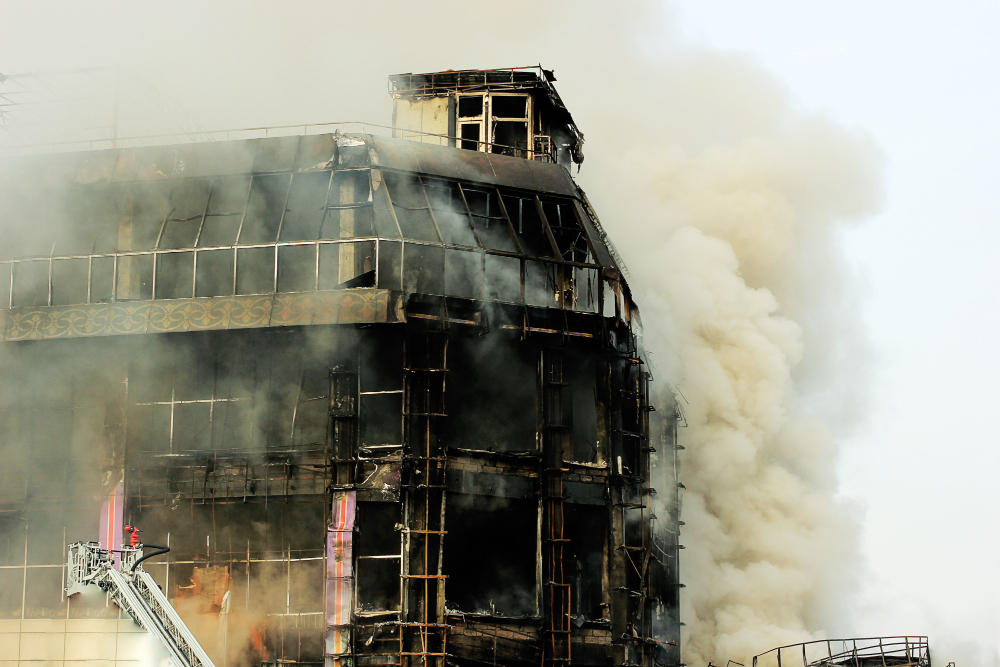
When a fire hits your home or business, the flames are only part of the problem. Two different types of damage get left behind. Knowing the fire damage vs smoke damage difference is the first step toward a proper recovery.
Many people think the two are the same. However, they are different from each other. They harm your property in different ways, spread through different paths, and need different repairs.
Treating them the same way is a common mistake. It can leave part of the damage untreated, which costs you more later.
This guide explains each type of damage in simple terms and shows why the difference matters for your repairs and your insurance claim.
What Is Fire Damage?
Fire damage refers to the direct destruction caused by the flames, including charred framing, melted fixtures, and scorched drywall and flooring.
But the damage doesn’t end even after the flames die. Intense heat spreads throughout the property, affecting areas the fire never reached. It can warp metal, crack tile, weaken structural beams, and even shatter windows from the extreme temperature alone.
The water used to put out the fire adds even more damage. That’s why water damage almost always comes with a serious fire.
Various types of fire damage include:
- Structural damage to framing, roofing, and support beams
- Surface damage to walls, ceilings, and floors
- Content damage to furniture, electronics, and belongings
- Secondary damage from firefighting water and chemicals
What Is Smoke Damage?
Smoke damage isn’t always obvious at first. Even after the fire is out, fine soot and smoke particles can spread throughout the building. They settle on walls, ceilings, furniture, and inside air vents, leaving behind stains, unpleasant odors, and residue in areas that may look untouched by the fire.
That’s what makes smoke so tricky. A small kitchen fire can leave soot and odor throughout the whole house. Smoke soaks into carpet, upholstery, drywall, and clothing. It settles deep in the fibers where you can’t reach it. Left alone, it keeps causing damage for weeks or even months.
Smoke also comes in different forms:
- Dry smoke from fast, hot fires leaves a powdery residue
- Wet smoke from slow, smoldering fires leaves a sticky, thick film
- Protein smoke from kitchen fires is nearly invisible but has a strong odor
Good smoke damage cleanup depends on knowing which type you have. Each one needs a different approach.
The Difference Between Fire and Smoke Damage
The difference between fire and smoke damage comes down to a few simple things. Here’s the breakdown point by point.
Cause
Fire damage extends far beyond what was directly burned by the flames. Many materials can be severely affected by intense heat, even if they never catch fire. High temperatures can blacken wood, melt plastics, warp metal, crack glass, and permanently damage furniture, appliances, and structural components.
Smoke also causes a second layer of damage that is often less visible but equally destructive. As a fire burns, it releases soot particles and harmful gases that spread throughout the property. These contaminants can settle on walls, ceilings, furniture, and belongings, and infiltrate air ducts and hidden spaces. The result is stubborn staining, corrosive residue, and lingering smoke odors that can persist long after the fire has been extinguished.
Location
Fire damage stays close to where the fire started. It follows the path of the flames and the hottest air around them. You can usually trace it from one room outward.
Smoke damage does the opposite. Smoke rises, drifts, and gets pulled through your HVAC system into every part of the building. A fire in one room can leave soot and odor on another floor. That’s why smoke damage covers far more of your property than the fire itself.
Visibility
Fire damage is easy to spot. Charred wood, melted plastic, and blackened walls are right in front of you. What you see is close to what you get.
Smoke damage is often hidden. It hides inside wall cavities, air ducts, insulation, and the fibers of your carpet and furniture. It can also be nearly invisible, like the greasy film from a kitchen fire. You may not notice it until the smell or staining shows up days later.
Timeline
Damage from the fire is quick but stops at a certain point. Once the fire is extinguished, all damage that it caused has been done.
But smoke damage continues long after the fire is extinguished. Smoke builds up gradually, odors penetrate further, and stains develop and worsen over time. This explains the need for smoke cleanup even when the fire seems to have been dealt with.
Corrosion
Fire and heat can burn wood, melt plastics, deform metals, break glass, and deteriorate building materials in less than a few minutes.
However, the damage caused by smoke differs from that of fire. The soot deposited on surfaces contains corrosive particles that can react with surfaces even after the fire has been extinguished. Failure to clean up smoke may cause permanent damage to items.
Repair Method
Fire damage usually needs rebuilding. Burned framing, drywall, and flooring often have to be torn out and replaced.
Smoke damage needs a different fix entirely. It calls for deep cleaning, soot removal, deodorizing, and air purification, not demolition. Because the two need such different work, a real restoration treats them as separate jobs done together.
Understanding fire damage and smoke damage is crucial. One destroys what it touches. The other spreads quietly and does its damage over time. A full recovery has to deal with both, not just the part you can see.
Why This Difference Matters
Knowing the fire damage vs smoke damage difference isn’t just useful to know. It shapes how your property gets restored and how your insurance claim is handled.
Fixing only the visible fire damage leaves a home that looks repaired but still smells like smoke. It also leaves acidic residue hidden behind the walls. Cleaning smoke without fixing damaged structure is unsafe.
A proper restoration handles both. It follows a clear order:
- Secure the property and make it safe to enter
- Assess both the fire and smoke damage
- Remove debris and materials that can’t be saved
- Extract water left from firefighting
- Clean soot and residue from every surface
- Deodorize to remove trapped smells
- Rebuild and repair to pre-loss condition
Each step depends on knowing what was burned versus what was contaminated by smoke.
For insurance, documenting both types separately helps you get paid fairly. Adjusters treat structural loss and smoke damage as separate items, so a detailed assessment protects your claim.
Recover Fully with American Restoration Water & Fire
After a fire, you need a team that handles both the flames and the smoke. That’s what we do at American Restoration Water & Fire.
We handle the full process: emergency cleanup, soot removal, odor elimination, water extraction, and complete repairs and rebuilds. We return your property to its pre-loss condition.
Fire damage only gets worse with time, so we’re available 24/7. In metro areas, we aim to arrive within an hour. In rural areas, within two hours. We also work directly with your insurance provider to make the claim easier.
Frequently Asked Questions
Can there be smoke damage without fire damage?
Yes. Smoke can travel from a neighboring property, a nearby wildfire, or even a small contained fire without flames ever reaching your home. Even without direct fire exposure, smoke can leave behind soot, residue, and persistent odors that require professional smoke damage restoration.
Is smoke damage harmful to my health?
Yes. Smoke residue contains soot and chemicals that can irritate your eyes, skin, and respiratory system. Professional cleanup and air purification help remove these contaminants and create a safer indoor environment.
Can I clean up smoke damage myself?
Minor smoke residue may be cleaned from some surfaces, but soot is highly acidic and can cause permanent staining or damage if not handled properly. Professional restoration ensures thorough cleanup and odor removal.
How quickly should I address smoke and fire damage?
You should begin the restoration process as soon as possible. Soot can start damaging surfaces within hours, and smoke odors become more difficult to remove the longer they remain.
Does homeowners insurance cover fire and smoke damage?
Many homeowners’ insurance policies cover fire and the resulting smoke damage, but coverage varies by policy. A professional inspection can help document the damage and support your insurance claim.
Will the smoke smell go away on its own?
No. Smoke odors often penetrate walls, furniture, carpets, and other porous materials. Professional deodorization is typically required to completely remove the odor.