


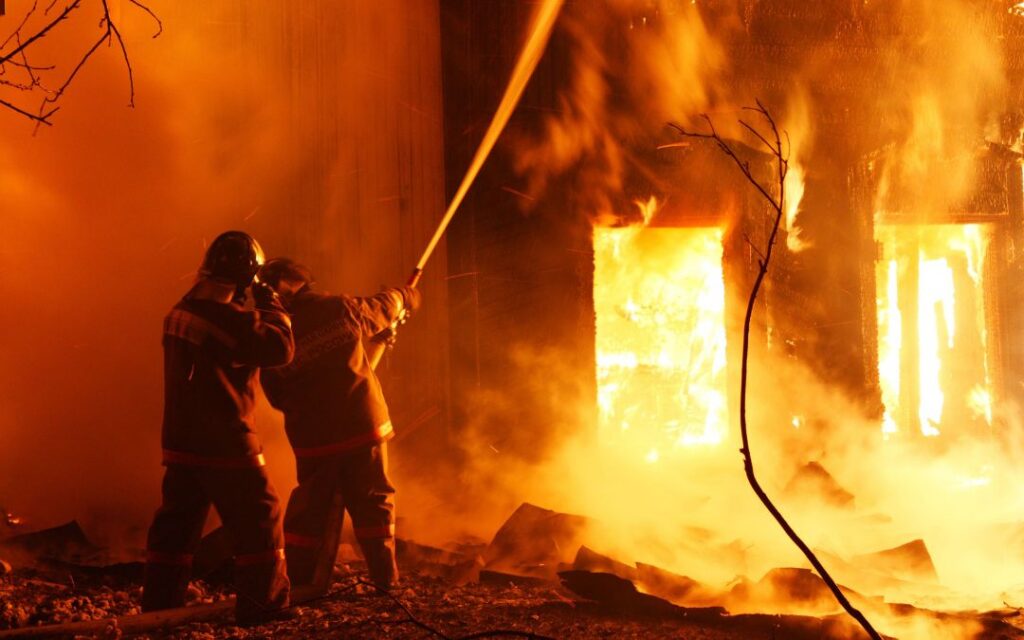
A commercial fire can do more than damage a building. It can interrupt operations, destroy inventory, displace employees, and leave customers without access to your business.
Commercial properties also have risks that homes usually do not. Restaurants have cooking equipment and grease-filled exhaust systems. Offices carry heavier electrical loads. Warehouses and retail spaces may hold large amounts of combustible inventory.
Understanding the causes of commercial fire damage means looking at how your business actually operates. Many fires begin with problems that seem minor, such as grease buildup, an overheating motor, a faulty connection, or poorly stored materials.
Why Commercial Fire Risks Differ
Businesses use more equipment, often for longer periods, and several ignition sources may operate in the same building.
A restaurant, for example, may have cooking appliances, exhaust systems, refrigeration equipment, and electrical equipment running throughout the day. An office may depend on computers, servers, appliances, and HVAC systems.
Occupancy also matters. Employees, customers, equipment, and stored materials can affect how quickly smoke and heat move through a building.
A restaurant hood fire is a good example. Grease can build up inside the hood and ductwork, allowing flames to travel beyond the original cooking equipment. An office electrical fire may instead begin inside a panel or piece of equipment and spread to nearby furnishings.
The causes of commercial fire damage are closely connected to how the property is used and maintained.
Common Causes of Commercial Fire Damage
Commercial fires can start in many different ways, but most trace back to a few predictable risk areas such as kitchens, electrical systems, mechanical equipment, and storage practices. Understanding these common sources helps businesses recognize hazards early and reduce the likelihood of serious damage.
1. Kitchen and Hood Fires
Commercial kitchens produce heat and grease every day. When grease accumulates inside cooking equipment or exhaust systems, it can become fuel when exposed to flames or extreme heat.
Watch for: Heavy grease buildup, unusual smoke, or problems with cooking equipment or the fire suppression system.
A suppression system can control a fire, but it does not remove grease buildup or repair damaged equipment.
2. Electrical Panel and Equipment Failures
Commercial electrical systems handle significant loads. Loose connections, damaged wiring, overloaded circuits, and failing equipment can generate heat and eventually ignite nearby materials.
Watch for: Buzzing, burning odors, unusual heat, repeated breaker trips, flickering equipment, or unexplained shutdowns.
Recurring electrical problems should be investigated rather than treated as ordinary maintenance.
3. HVAC and Mechanical Room Fires
Mechanical rooms contain motors, wiring, compressors, boilers, and other heat-producing equipment. A failed motor or damaged electrical component can become an ignition source.
These areas are easy to overlook because much of the equipment is enclosed or rarely seen by employees.
Watch for: Burning smells, unusual noises, excessive heat, or equipment that repeatedly shuts down.
Keep mechanical rooms clear so equipment can be inspected and serviced safely.
4. Storage Room Fires
Cardboard, packaging, paper products, textiles, chemicals, and other combustible materials can provide fuel when stored near an ignition source.
The issue is not simply having combustible inventory. Poor placement can put that material next to electrical panels, heaters, motors, or other heat-producing equipment.
Watch for: Overcrowded storage areas, blocked equipment, or combustible materials stored too close to heat sources.
5. Smoking-Related Fires
Discarded smoking materials can remain hot after they appear to be extinguished. Trash, landscaping, paper products, and outdoor storage can provide fuel.
Pay particular attention to dumpsters, entrances, loading areas, and designated smoking locations.
Watch for: Cigarette waste around entrances or smoking receptacles placed near combustible materials.
6. Arson and External Fire Spread
A commercial fire does not always begin inside the building. Exterior fires can spread through doors, windows, roofing materials, or nearby storage.
Dumpsters, vehicles, accumulated waste, and unsecured exterior areas can create additional exposure.
Watch for: Combustible materials stored against the building or waste accumulating near entrances and walls.
The causes of commercial fire damage can involve the property around your building as much as what is happening inside it.
Mistakes That Increase Commercial Fire Risk
Some routine shortcuts can increase both fire risk and the severity of the resulting damage.
- Skipping hood cleaning: Grease buildup gives a kitchen fire more fuel and can allow flames to travel through exhaust areas.
- Ignoring electrical warning signs: Repeated breaker trips or burning odors can indicate an equipment or wiring problem.
- Overloading storage areas: Excess inventory increases available fuel and can make equipment harder to access.
- Blocking exits or fire equipment: Stored materials can slow evacuation and interfere with emergency response.
Fire safety depends on how your business uses the building every day, not just on the equipment installed inside it.
Recovering After a Commercial Fire
Understanding the causes of commercial fire damage can help you recognize risks, but prevention cannot eliminate every possibility. When a fire occurs, the damage may extend well beyond the burned area.
Smoke and soot can spread through the building, while firefighting water can affect floors, walls, equipment, and inventory. Some materials may also require removal before restoration can begin.
American Restoration provides commercial fire restoration, including smoke and soot cleanup, damage assessment, and restoration of affected areas. We understand that your business needs more than a cleaned building. You need a clear path toward getting the property functional again.
If your business has experienced a fire, contact American Restoration to discuss the damage, cleanup, and next steps for restoring your property.
FAQs
What is a common cause of commercial fires?
Commercial fires can begin with kitchen equipment, electrical failures, HVAC components, combustible storage, smoking materials, or intentional ignition.
Why are commercial kitchen fires different?
Grease can accumulate inside cooking equipment and exhaust systems. Once ignited, flames can travel through areas beyond the original appliance.
Can an HVAC system cause a commercial fire?
Yes. Motors, wiring, compressors, and other mechanical components can overheat or fail and become ignition sources.
What happens after a commercial fire?
The property may need smoke and soot cleanup, water removal, damaged material assessment, and restoration before normal operations can resume.