


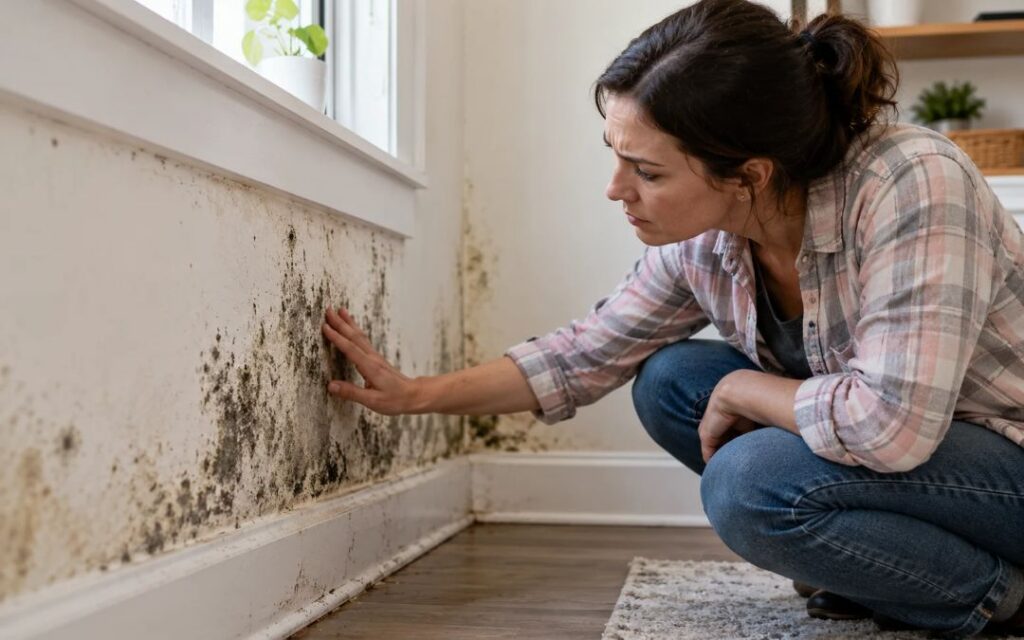
Few things feel more frustrating than winning a battle with bathroom mold, only to watch the same dark spots creep back a few weeks later. You scrubbed hard. You used the strong stuff. So why does it look like nothing happened? If your mold keeps coming back, you are not doing a bad job of cleaning. You are most likely treating the symptom instead of the cause.
Returning mold sends a clear signal, and once you learn to read it, you can break the cycle instead of repeating it every month. Below are the five most common reasons mold comes back in homes across New Mexico and West Texas, along with practical fixes for each.
Short answer: Mold usually returns because the moisture source was never fixed, cleaning only reached the surface, growth is hiding behind walls or floors, spores spread during cleanup, or indoor humidity stays too high.
Reason 1: The Moisture Problem Was Never Solved
Mold needs moisture to grow. Remove the mold but leave the water, and new growth is only a matter of time.
The source is not always obvious. A pinhole leak in a supply line, a shower that drips behind the tile, or condensation on cold pipes can all keep a surface damp enough for mold to return. Cleaning without finding the source of the water is like mopping under a dripping faucet.
The fix:
- Check pipes, fixtures, and window frames near the problem area
- Look for condensation on walls, windows, and ductwork
- Repair the leak before you clean, not after
The EPA notes that the key to mold control is moisture control, and it recommends fixing the water problem as part of any cleanup.
Reason 2: Cleaning Only Reached the Surface
Bleach makes mold look gone fast. On hard, non-porous surfaces like tile or glass, that may be enough. Drywall, wood, carpet, and ceiling tiles are different.
These porous materials let mold grow into them. Spraying the surface removes the visible stain, but growth deeper inside stays alive and spreads back out. The EPA advises that porous materials with mold may need to be thrown away rather than cleaned.
| Approach | What It Handles | Where It Falls Short |
| Surface cleaning | Small spots on tile, glass, or sealed surfaces | Can’t reach growth inside drywall, wood, or carpet |
| Professional remediation | Hidden growth, porous materials, larger areas | Takes more time and planning than a quick scrub |
If the same patch of drywall keeps turning dark, you may need to remove it. Our guide on professional mold remediation vs. DIY mold removal can help you decide which route fits your situation.
Reason 3: The Visible Mold Was Only Part of the Problem
That spot on the wall might be the small edge of a much larger colony. Mold often starts where water collects out of sight, such as inside wall cavities, under flooring, or above a ceiling, then works its way toward the surface.
Signs the problem goes deeper:
- A musty smell that stays even after cleaning
- Paint that bubbles, peels, or feels soft
- Mold that returns in the exact same spot every time
When growth keeps reappearing in one place, the real source is likely behind it. Finding it usually takes moisture meters or opening a small section of wall.
Reason 4: Cleaning Spreads Spores to New Areas
Here is the twist most people don’t expect. Scrubbing or dry-brushing mold can release spores into the air, and those spores settle on new surfaces. If any of those spots stay damp, new growth can start there.
HVAC systems make this worse. Running the fan during cleanup can carry spores through the ductwork and into other rooms.
The fix:
- Turn off the HVAC system while cleaning moldy areas
- Mist the area lightly instead of dry-scrubbing
- Seal moldy materials in plastic bags before carrying them out
Professional crews use containment barriers and air filtration to keep spores from traveling. You can see how that process works in our steps to safe mold remediation.
Reason 5: Indoor Humidity Stays Too High
You might think a desert climate rules this one out. Not quite. Swamp coolers add moisture to indoor air, and monsoon season brings humid stretches every summer. Bathrooms without working exhaust fans trap steam after every shower.
The EPA recommends keeping indoor relative humidity below 60 percent, ideally between 30 and 50 percent. Above that range, mold can find enough moisture to grow even without a leak.
The fix:
- Pick up an inexpensive hygrometer to track humidity
- Run bathroom fans during showers and for a while after
- Service your evaporative cooler so pads and pans don’t stay soggy
- Keep air moving in closets and corners
Stop the Cycle When Mold Keeps Coming Back
If mold keeps coming back no matter how often you clean, the cleaning isn’t the problem. Something is feeding it. Small surface spots are often manageable on your own, but repeat growth, musty odors, and soft drywall point to a moisture issue that needs a closer look.
That’s where American Restoration’s IICRC-certified team steps in. Our mold removal and remediation services find the source, contain the area, and remove damaged materials so growth doesn’t keep returning. If a leak started it all, we also handle water damage restoration from drying through repair. Call (505) 390-8728 in Albuquerque or (915) 265-5771 in El Paso, or schedule your free mold inspection and get to the root of the problem.
Frequently Asked Questions
Does bleach kill mold permanently?
No. Bleach can remove mold from hard surfaces, but it doesn’t fix the moisture causing it and may not reach growth inside porous materials.
How fast can mold grow back after cleaning?
Mold can return within days or weeks if moisture remains. The EPA advises drying damp materials within 24 to 48 hours to help prevent new growth.
Can I just paint over mold?
Painting over mold hides it but doesn’t stop it. Growth continues underneath and often shows through as stains or peeling paint.
What does it mean if mold always returns in the same spot?
It usually means a hidden moisture source sits nearby, such as a leak, condensation, or poor ventilation. That spot needs inspection, not just more cleaning.
When should I call a professional for mold?
Call a professional if mold keeps returning, covers a large area, or follows water damage. Trained crews can find hidden growth and remove it safely.