


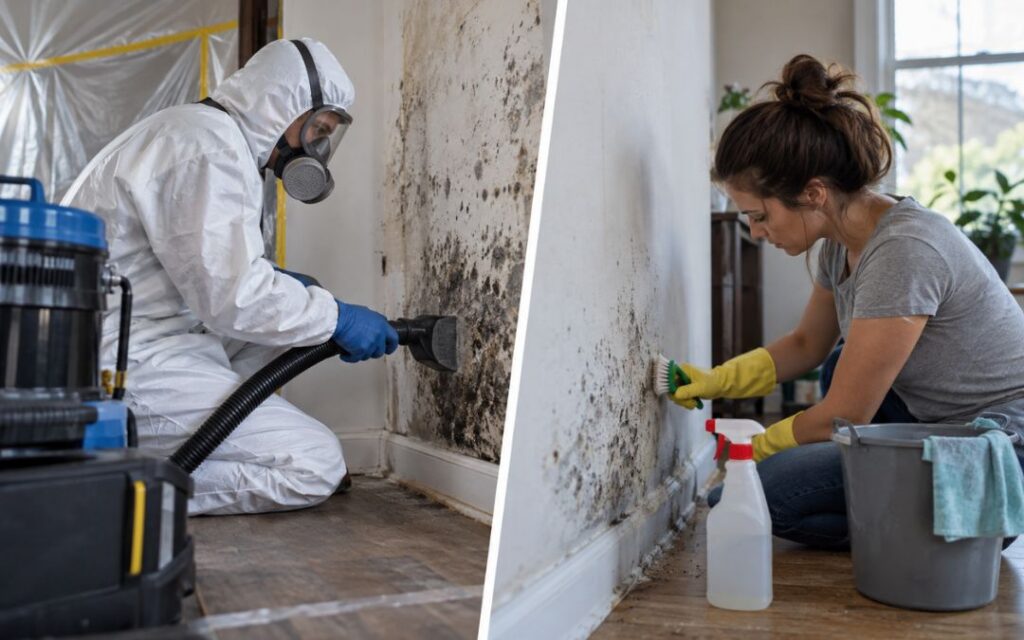
Not every mold problem requires the same response. A small patch on bathroom tile is one situation. Mold behind drywall after a plumbing leak is another. Knowing the difference can help you decide if careful DIY cleanup is enough or if the problem needs professional remediation.
The decision comes down to more than how much mold you can see. The location, affected material, moisture source, and extent of the damage all matter.
When Can You Handle Mold Removal Yourself?
Not every mold problem needs professional remediation. A small amount of surface mold may be manageable when the area is easy to access and the moisture source has been fixed.
1. The Mold Is Limited to a Small Area
A few spots are easier to handle than mold covering a wall or several rooms. Check around the area first for signs of spreading or hidden moisture.
2. The Mold Is on a Surface You Can Clean
Hard surfaces like tile and glass are easier to clean. Porous materials such as drywall, insulation, and carpet can hold moisture and may need to be removed.
3. You Have Fixed the Moisture Source
Fix leaks, condensation, or high humidity before cleaning. Otherwise, the mold may return. Once the area is dry, you can focus on removing the visible mold.
4. There Is No Significant Water Damage
A small surface patch is different from mold caused by flooding or a major leak. Water may have reached areas behind walls, under flooring, or inside insulation, requiring a more thorough assessment.
When Do You Need Professional Mold Remediation?
Once mold moves beyond a simple surface problem, professional remediation becomes more useful. The work may involve finding hidden moisture, containing the affected area, removing damaged materials, and drying the structure.
1. Mold Has Spread Beyond a Small Area
Large or widespread mold growth is harder to contain and clean safely. Several affected rooms can also indicate that moisture has moved through the structure. At this point, treating individual spots may not address the full extent of the problem.
2. Mold Is Hidden Behind Walls or Under Flooring
Musty odors, water stains, bubbling paint, warped flooring, or recurring growth can point to hidden moisture or mold. Mold behind drywall or beneath flooring may require controlled access and removal. Cleaning the visible surface alone will not reach what is hidden underneath.
3. Porous Materials Are Affected
Some materials cannot be effectively cleaned once mold has penetrated them. Affected drywall, insulation, carpet, or other porous materials may need to be removed. This also requires careful handling so contaminated debris does not spread to clean areas.
4. Mold Keeps Coming Back
Recurring mold is a sign that something has not been resolved. The moisture source could be a small plumbing leak, condensation, poor ventilation, or moisture trapped inside building materials. Repeatedly cleaning the same area without finding the cause wastes time and may allow the problem to grow.
5. Water Damage Is Involved
Mold following flooding, sewage backup, or a major plumbing leak deserves closer attention. The project may require water extraction, moisture detection, structural drying, mold cleanup, and repairs. Removing visible mold is only one part of restoring the affected area.
6. You Cannot Find the Moisture Source
Sometimes the reason for mold is obvious. Other times, there is no visible leak or water source. Moisture can collect inside walls, under flooring, or in areas with poor airflow. Professional equipment can help locate damp materials that are not easy to identify during a visual inspection.
7. The Area Needs Extensive Containment or Drying
Larger remediation projects may require more than cleaning supplies. Depending on the situation, teams may use containment barriers, air filtration equipment, dehumidifiers, air movers, and moisture meters.
The purpose is to control the affected area, remove contamination, and get moisture levels back under control.
DIY vs. Professional Mold Removal: How Do You Decide?
DIY may be reasonable when:
- The mold is small and isolated
- It is clearly visible and accessible
- It is on a hard, cleanable surface
- There is no major water damage
- You have fixed the moisture source
Professional remediation makes more sense when:
- Mold is widespread or recurring
- Growth is hidden
- Porous building materials are affected
- Significant water damage is involved
- You cannot find the moisture source
- Extensive containment or structural drying is needed
The key is to look beyond the visible mold. If the problem involves the building materials or moisture inside the structure, it is no longer just a simple cleaning job.
Frequently Asked Questions
Can I remove mold myself?
Small amounts of mold on accessible, hard surfaces may be manageable with careful cleaning. Larger, hidden, recurring, or water-related problems need a more thorough approach.
How much mold is safe to remove myself?
There is no single size limit. The material, location, moisture source, and extent of the growth all matter.
When should I call a professional for mold?
Consider professional help when mold is widespread, recurring, hidden behind walls or under flooring, affecting porous materials, or linked to significant water damage.
Can mold return after DIY removal?
Yes. Mold can return if the underlying moisture problem remains. Leaks, condensation, high humidity, and trapped moisture can all contribute to recurring growth.
Is professional mold remediation worth it?
DIY may be enough for a small surface problem. Professional remediation is more useful for hidden mold, extensive moisture damage, contaminated materials, or projects requiring specialized drying and containment.
Concluding Up
The choice between DIY mold removal and professional remediation depends on the problem behind the visible growth. A small patch on a cleanable surface may not require extensive intervention. Hidden mold, recurring growth, water damage, and affected building materials are different situations.
Before you start cleaning, identify the moisture source and look at what is happening around the visible mold. That simple assessment can help you decide how much work the problem really requires.
Need Professional Mold Remediation?
American Restoration provides mold remediation services for homes dealing with mold and moisture damage. Contact the team to discuss your situation and determine the right next step.