


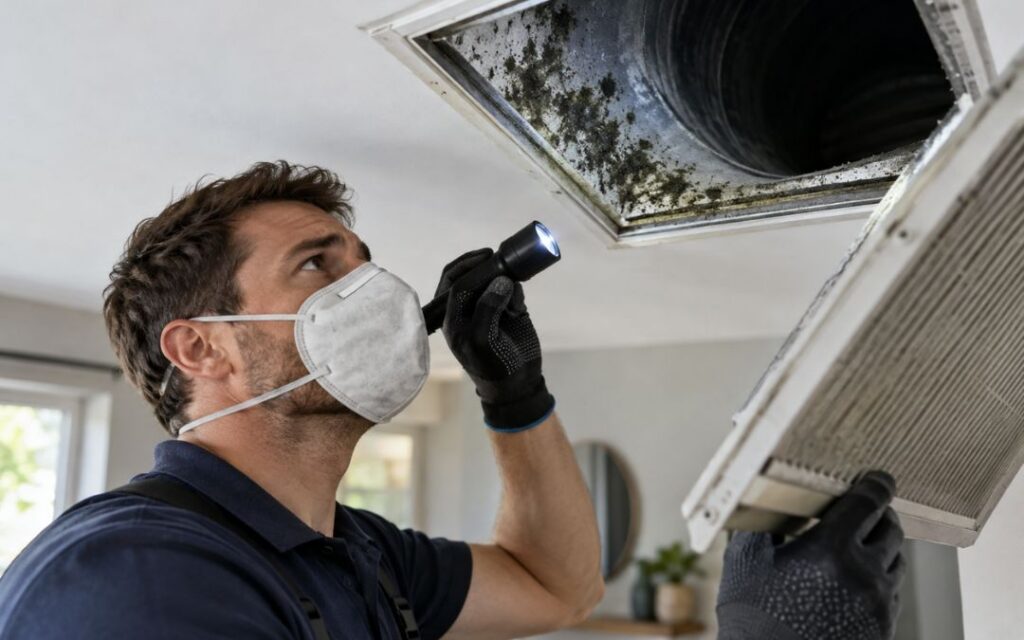
You turn on the AC and notice a musty smell that was not there before. Maybe there is also dark buildup around one of the vents or condensation near the ductwork. It is easy to assume the vent simply needs cleaning, but these signs can sometimes point to a moisture problem within the HVAC system.
Mold in air ducts is not always easy to spot because much of the ductwork is hidden. Knowing the warning signs can help you figure out when you are dealing with ordinary dust and when the problem needs a closer look.
5 Warning Signs of Mold in Air Ducts
Not every sign below confirms mold on its own. Look at the full picture, especially when odors, visible growth, and moisture occur together.
1. A Musty Smell Comes From Your Vents
A persistent earthy or musty odor that becomes noticeable when the HVAC system runs is a good reason to investigate.
The smell alone does not prove mold is present. It becomes more concerning when it keeps returning after the vents have been cleaned or appears alongside dampness, visible growth, or other moisture problems.
2. You See Mold-Like Growth Around a Vent
Dark spots or unusual discoloration around an air vent can be concerning, but not every dark mark is mold. Dust and dirt can collect around registers and look similar.
Look for other clues. Recurring growth, a musty smell, condensation, or similar buildup inside accessible HVAC components can point to a larger problem.
Cleaning the vent may improve its appearance without addressing the source.
3. The Same Growth Keeps Coming Back
You clean a vent, but the discoloration returns a short time later. That is a sign to look beyond the surface.
Recurring growth may be connected to condensation, excess humidity, a leak, poor insulation, or another unresolved moisture problem. Until that source is corrected, repeated cleaning may only provide a temporary result.
4. You Notice Moisture or Condensation Around the Ducts
Moisture is one of the biggest conditions that supports mold growth.
Check for condensation on ductwork, damp insulation, water near the air handler, clogged condensate drains, or high indoor humidity. Poorly insulated ducts can also develop condensation when cold surfaces meet warm, humid air.
Finding and correcting the moisture source is an important part of addressing mold in HVAC ducts.
5. Mold or Moisture Appears After Water Damage
Mold that appears after a plumbing leak, flood, or other water event deserves closer attention.
Water can reach duct insulation, drywall, flooring, and other materials that are not immediately visible. If the mold appeared after significant water damage, checking the vent alone may not reveal the full extent of the problem.
What Causes Mold in Air Ducts?
Mold needs moisture to grow. Several HVAC-related issues can create the damp conditions it needs, including:
- Condensation on cold ductwork
- High indoor humidity
- Leaks near ductwork
- Clogged HVAC condensate drains
- Poor duct insulation
- Flooding or other water damage
- Moisture trapped in duct insulation
The moisture source is not always inside the duct itself. A problem around the HVAC unit or nearby building materials can create conditions that support mold growth.
How Is Mold in Air Ducts Properly Addressed?
The solution depends on where the mold and moisture are found. A thorough approach may include several steps.
1. Find the moisture source: Check for leaks, condensation, drainage problems, and humidity issues.
2. Inspect the HVAC system: Look beyond the visible vent to determine where moisture or mold is actually present.
3. Determine what can be cleaned: Some HVAC components can be cleaned and restored, while heavily affected porous materials may need removal.
4. Clean affected components: Appropriate cleaning methods should be used for the specific material and level of contamination.
5. Dry the affected area: Dehumidification and other drying methods may be needed to bring moisture levels under control.
6. Correct the underlying problem: Repair leaks, improve insulation, address drainage issues, or control humidity to reduce the chance of recurring growth.
Frequently Asked Questions
How do I know if I have mold in my air ducts?
Look for several signs together, including persistent musty odors, recurring discoloration, visible mold-like growth, condensation, or moisture problems around the HVAC system.
Does a musty smell always mean mold?
No. A musty smell can have other causes. If the odor persists when the HVAC system runs and appears alongside moisture or visible growth, further investigation is worthwhile.
Can mold in air ducts spread through the house?
If mold is present within an affected HVAC system, particles may move with circulating air. Addressing the contamination and its moisture source can help prevent the problem from spreading through the system.
Can I clean mold from my air ducts myself?
Basic cleaning of removable vent covers is different from addressing confirmed mold inside ductwork. Hidden growth, recurring contamination, affected insulation, and significant moisture problems need a more thorough assessment.
Does air duct cleaning remove mold?
Routine duct cleaning and mold remediation are not necessarily the same service. Confirmed mold may require moisture control, cleaning of affected components, removal of damaged materials, and other remediation work.
Conclusion
Mold in air ducts should not be judged by a dark spot around a vent alone. Persistent odors, recurring growth, condensation, and water damage provide better clues about what may be happening inside or around the HVAC system.
Start by identifying the moisture source and determining if the problem is limited to a surface or extends into the ductwork and surrounding materials. That distinction can help you choose the right next step.
Need Professional Mold Remediation?
American Restoration provides mold remediation services to help identify and address mold and moisture problems in your home. Contact the team to discuss your situation and the next steps.