


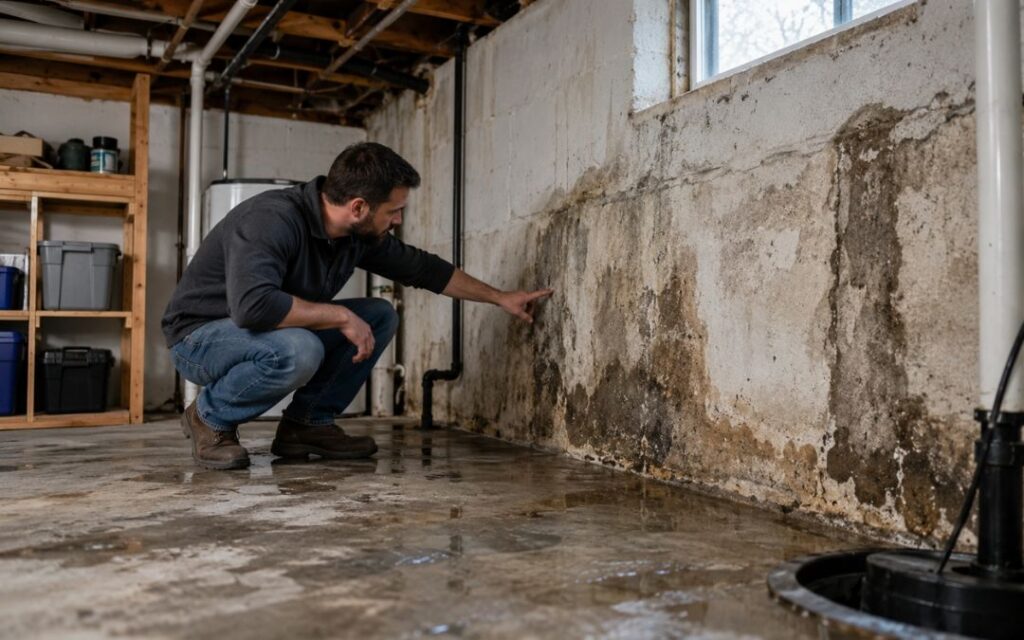
A basement does not have to be flooded to have a moisture problem. You may first notice a damp wall after a storm, a musty smell that lingers, or paint that suddenly starts bubbling.
These changes can be easy to dismiss when there is no obvious puddle or active leak. However, they may point to water entering through the foundation, a plumbing leak, poor drainage, or moisture building up inside the space.
Knowing the signs of water damage in a basement can help you spot a problem early and decide when it needs closer attention.
7 Signs of Water Damage in a Basement
Some basement water problems are obvious, while others show up as small changes to walls, floors, or the air. Here are the main signs to watch for and what they may tell you about the source.
1. Damp or Wet Walls
Walls that feel damp, particularly near the floor or corners, can indicate moisture entering through the foundation. You may notice it more after heavy rain.
The location and timing can provide a clue. Moisture that appears after rain may point to outside water, while dampness near pipes may have a different cause.
2. Water Stains or Discoloration
Brown, yellow, or dark stains on walls, ceilings, or floors can appear after a leak or period of moisture exposure.
An old stain does not always mean water is still entering the basement. However, a stain that grows, darkens, or appears alongside dampness may indicate an active leak.
3. Musty Odors
A persistent musty smell can be an early clue that moisture is present somewhere in the basement. Sometimes the odor appears before you can see the source.
Pay attention to the smell near walls, flooring, corners, and enclosed storage areas where moisture can remain hidden. If it continues along with staining or dampness, the area should be investigated.
4. Peeling or Bubbling Paint
Paint that peels, blisters, or bubbles can indicate moisture behind the surface. This can happen when water moves through a wall or humidity remains high.
Repainting may hide the damage for a short time, but it will not fix the moisture behind it. If the problem keeps returning, the source needs attention.
5. Warped Flooring or Wet Carpet
Basement flooring can swell, buckle, warp, or develop soft spots after exposure to water. Carpet may remain damp, develop an odor, or feel different underfoot.
Water can also move underneath flooring where it is difficult to see. A floor that looks dry on top may still have moisture trapped below it.
6. Mold or Mildew Growth
Mold or mildew growth can indicate that an area has remained damp. Check around walls, floors, ceilings, and other areas where moisture tends to collect.
If growth appears after a leak or flooding event, cleaning what you can see may not be enough. The moisture source also needs to be addressed.
7. Standing Water or Recurring Flooding
Standing water is an obvious sign of a basement water problem, but recurring small puddles also deserve attention.
Water may enter through foundation cracks, plumbing problems, drainage issues, a failed sump pump, or a drain backup. If the same area becomes wet repeatedly, removing the water without finding the cause will not solve the problem.
When Should You Call a Water Damage Restoration Professional?
Some basement water problems go beyond what surface drying can address. The signs of water damage in a basement that call for professional attention can include:
- Standing water or basement flooding
- Sewage or contaminated water
- Water inside walls, ceilings, or flooring
- Extensive damage to drywall, carpet, or other materials
- Recurring basement leaks
- Mold growth following water damage
- Moisture that cannot be located or fully dried
A restoration professional can locate affected areas, remove standing water, and use drying equipment to address moisture that may not be visible.
FAQs
What is the most common sign of basement water damage?
Damp walls, water stains, musty odors, and standing water are common signs. Recurring moisture is especially important because it can point to an unresolved leak or drainage problem.
Can a musty smell mean my basement has water damage?
It can. A persistent musty smell may indicate moisture behind walls, under flooring, or in another hidden area. Look for other signs such as dampness, stains, or mold.
Can basement water damage cause mold?
Yes. Moisture can create conditions that support mold growth. If mold appears after a leak or flooding event, addressing the moisture source is an important part of the cleanup.
How do I know if water damage is hidden?
Look for bubbling paint, warped flooring, persistent odors, damp walls, or stains without an obvious source. These clues can indicate moisture behind or underneath finished surfaces.
Should I worry about water stains in my basement?
A water stain does not always mean there is an active leak, but it should not be ignored. If the stain is new, growing, or accompanied by dampness, investigate the source.
Final Thought
The signs of water damage in a basement are not always dramatic. A small stain, damp wall, musty odor, or warped section of flooring can reveal a larger moisture issue. Paying attention to these changes can help you identify the source sooner and limit further damage. If water keeps returning or moisture is hidden inside building materials, you may need a professional assessment and drying.
Need Professional Water Damage Restoration?
American Restoration can help with basement water removal, drying, and restoration. Contact us to discuss the damage and determine the next steps.