


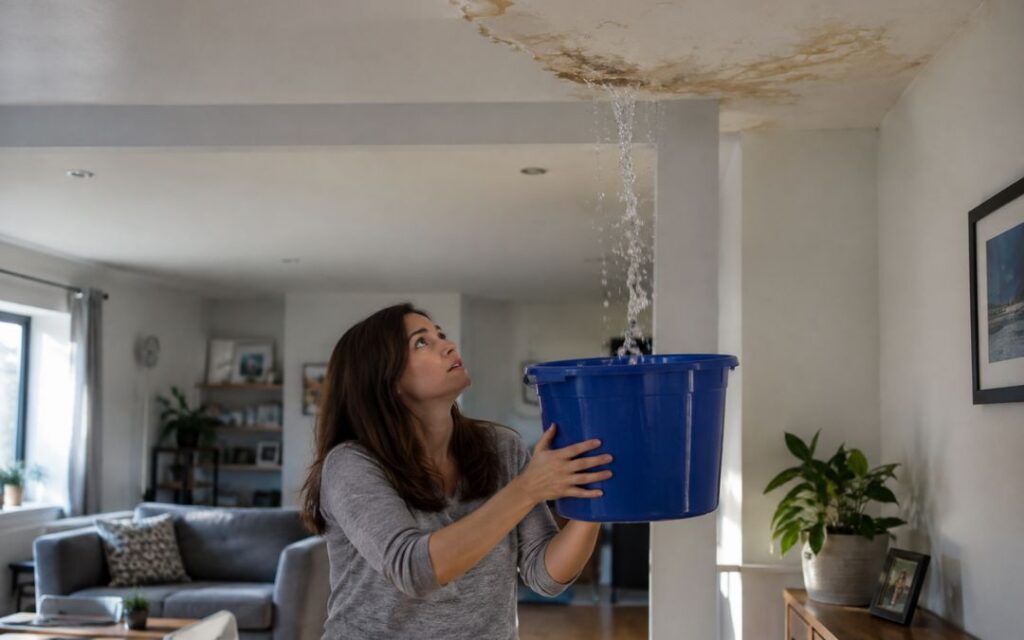
Water damage often starts with something that seems minor. A worn washing machine hose, a slow leak under the sink, or a clogged gutter may not look urgent at first. But water can move into places you cannot easily see, gradually affecting floors, walls, ceilings, and other materials. Some problems start inside the home, while others come from rain, poor drainage, or the foundation.
Understanding the common causes of water damage can help you recognize potential problems early and take action before a small leak becomes a much larger cleanup or repair project.
Where Does Water Damage Usually Start?
Water can enter a home from several directions, and the source often determines where the damage first appears. Some problems begin with plumbing or appliances inside the house, while others start outside with rain, drainage, or foundation issues.
Water Damage That Starts Inside Your Home
Many water problems begin inside the home, often around the systems and fixtures you use every day. Plumbing, appliances, and bathroom fixtures can all develop leaks that release water into areas where damage is not immediately visible.
1. Plumbing Leaks
Leaking pipes are a common source of water damage. Loose connections, damaged supply lines, or cracked drain pipes can release water into cabinets, walls, ceilings, or floors. A slow leak behind a wall may go unnoticed until staining, dampness, or material damage appears.
2. Appliance Failures
Washing machines, dishwashers, refrigerators with water lines, and water heaters can cause damage when a hose, seal, or connection fails. An aging supply hose may show few warning signs before it suddenly splits and releases a large amount of water.
3. Bathroom and Toilet Leaks
Toilets, sinks, showers, tubs, and supply lines can all become sources of leaks. Damaged caulking around a tub or shower can also let water reach areas beneath the surface. Water may travel under flooring or through gaps, affecting nearby rooms or the level below.
Water Damage That Comes From Outside
Rainwater does not always enter through an obvious opening. Problems with the roof, gutters, drainage, or foundation can gradually direct water toward areas of the home that are not designed to stay wet.
4. Roof Leaks
Missing or damaged shingles, worn flashing, and gaps around roof penetrations can give rainwater a path into the home. You may first notice a ceiling stain, peeling paint, damp insulation, or water around an attic area.
A roof leak can also be intermittent. Water may enter only during heavy rain, making the source harder to identify after the weather clears.
5. Gutters and Downspouts
Gutters are designed to move rainwater away from the home. When they become clogged, water can overflow and collect along the roofline or foundation.
Downspouts can create another problem when they discharge water too close to the house. Repeated water accumulation around the foundation can increase the chance of basement seepage or other moisture problems.
6. Foundation and Basement Problems
Cracks, gaps, poor grading, and pressure from groundwater can allow moisture to enter through the foundation. Basement walls or floors may show damp spots, staining, peeling paint, or other signs of moisture.
A small foundation crack does not automatically mean there is major structural damage. However, recurring water entering through the same area should be investigated so the source can be addressed.
Water Damage Caused by Weather and Emergencies
Some water damage happens during events that overwhelm a home’s normal drainage or plumbing systems. These situations can introduce large amounts of water quickly and may require a different response than a slow household leak.
7. Heavy Rain and Flooding
Heavy storms can overwhelm drainage systems, push water toward the foundation, or allow water to enter through damaged parts of the home. Flooding can also affect several areas at once rather than being limited to one leaking fixture or pipe.
The amount of water can make a major difference. Standing water that remains in a home can quickly affect flooring, drywall, furniture, and other materials.
8. Sewer or Drain Backups
A blocked sewer line or drain can force wastewater back into the home. This type of water damage is different from a clean supply-line leak because the water may contain contaminants.
Sewer backups can affect bathrooms, basements, floors, and lower areas of the home. Cleanup should be handled carefully, particularly when contaminated water has spread beyond a small, contained area.
FAQs About Water Damage
What is the most common cause of water damage in a home?
Plumbing problems are a major source of household water damage. Leaking pipes, supply lines, fixtures, and appliance connections can release water into areas that are difficult to notice.
What household items can cause water damage?
Washing machines, dishwashers, refrigerators with water lines, water heaters, toilets, and plumbing fixtures can all cause water damage if their hoses, seals, connections, or components fail.
Can a small leak cause major water damage?
Yes. A slow leak can allow moisture to build up inside walls, flooring, cabinets, or insulation. The visible amount of water may be much smaller than the affected area.
How can I prevent water damage in my home?
Inspect plumbing and appliance connections, maintain gutters and downspouts, watch for roof problems, and repair leaks promptly. Knowing the location of your main water shutoff can also help during an emergency.
What should I do first after discovering a water leak?
If it is safe, stop the water source or shut off the main water supply. Keep electrical hazards in mind around standing water, then remove belongings from the affected area and address the source and drying needs as soon as possible.
Summing Up
The common causes of water damage range from everyday plumbing leaks and appliance failures to roof problems, drainage issues, flooding, and sewer backups. The source may be obvious, or it may remain hidden behind a wall or beneath a floor. Paying attention to small leaks and moisture problems can help you address them before they spread and create more extensive damage.
Need Help With Water Damage?
American Restoration can help with water removal, structural drying, repairs, and restoration after a water-related incident. Reach out to us to discuss your situation and the next steps.