


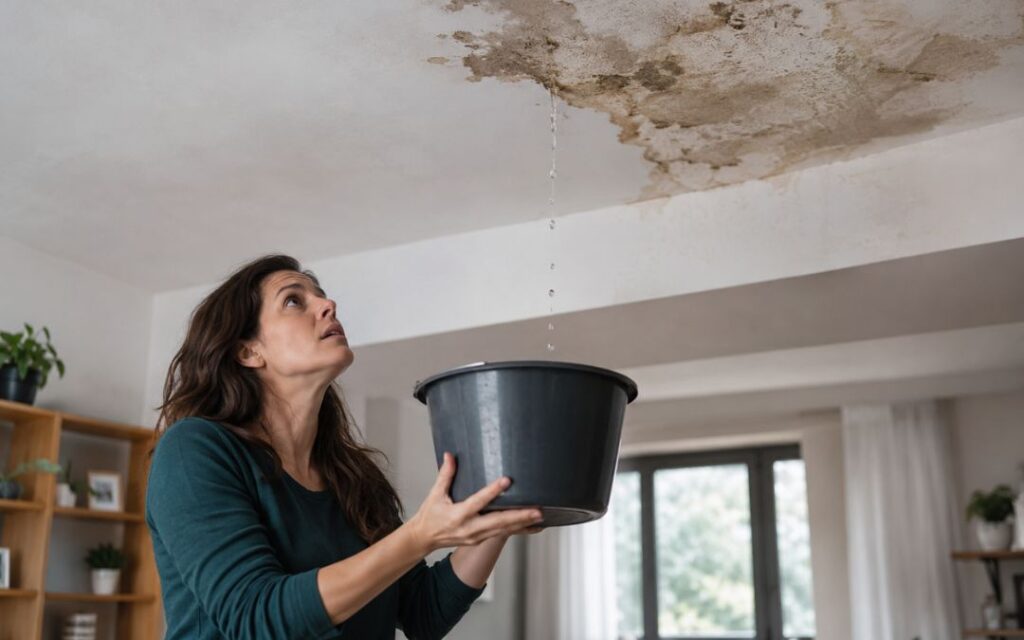
A roof leak does not always announce itself with a drip from the ceiling. Sometimes the first clue is a brown stain, damp insulation in the attic, peeling paint, or a musty smell that appears after a storm.
By the time water becomes visible inside the home, it may have already traveled through roofing materials, insulation, walls, or ceilings. Knowing the roof leak water damage signs can help you spot a problem sooner and prevent a small leak from turning into more extensive interior damage.
What Are the Signs of Roof Leak Water Damage?
The first signs of a roof leak may appear inside the home rather than on the roof itself. Some are easy to notice, while others become apparent only after rain or once moisture has had time to spread.
1. Water Stains on Ceilings or Walls
Brown, yellow, or discolored patches on a ceiling or wall can indicate water intrusion from above. The stain may become darker after rain or gradually increase in size. Keep in mind that the stain does not always sit directly below the roof leak. Water can travel along framing and other materials before reaching the surface you can see.
2. Damp or Sagging Drywall
Drywall can absorb water and become soft, swollen, or saggy. You may notice bubbling, changes in texture, or a section of ceiling that appears lower than usual. A sagging ceiling deserves prompt attention, particularly if water is still entering the area. Avoid standing directly beneath severely damaged sections.
3. Musty Smells or Mold Growth
A musty odor can indicate that moisture has remained trapped in an attic, ceiling, wall, or another enclosed area. Mold growth can also appear when materials stay damp. The smell may be noticeable before visible damage appears, especially in areas that are difficult to inspect regularly.
4. Wet or Damaged Attic Insulation
If your attic insulation is damp, compressed, stained, or discolored, water may be entering through the roof above it. Wet insulation can also indicate that moisture has been present for more than a brief period. Check the area around roof penetrations and nearby decking for additional signs of moisture.
5. Peeling or Bubbling Paint
Paint that starts peeling, blistering, or bubbling can be a sign of moisture behind the surface. This may occur on ceilings or upper sections of walls after a roof leak. Repainting the area will not address the source. If the damage returns after drying or repainting, the area needs further inspection.
6. Drips or Moisture After Rain
An active drip during or shortly after rainfall is one of the clearest roof leak water damage signs. However, not every roof leak produces a constant drip. Some leaks appear only during heavy rain or when wind pushes water into a vulnerable area. A leak may stop before you have a chance to inspect it, leaving behind stains or damp materials.
Where Should You Look for a Roof Leak?
Finding the visible damage is often easier than finding where the water entered. Since water can move away from the original entry point, inspect areas above and around the damage instead of assuming the leak is directly overhead.
Check the Attic
If it is safe to access, look for wet insulation, stained roof decking, damp rafters, or darkened areas around roof penetrations. These clues can help narrow down where water is entering.
Inspect Flashing and Roof Penetrations
Areas around chimneys, vents, skylights, pipes, and other roof penetrations can be vulnerable to leaks. Damaged or deteriorated flashing can also create a path for rainwater.
Check Gutters and Drainage
Clogged gutters and poor drainage can cause water to collect where it should not. Look for overflowing gutters, standing water, or signs that water is repeatedly reaching the roof or foundation.
What Should You Do If You Find Roof Water Damage?
Once you notice roof leak water damage signs, focus on limiting further damage and keeping the area safe.
Stop Further Water Entry
If you can safely identify the source, prevent more water from entering. Do not climb onto a wet or damaged roof.
Protect the Interior
Move belongings away from the affected area and place a container under active drips when safe. Stay clear of sagging ceilings.
Check for Hidden Moisture
Water can remain inside drywall, insulation, or flooring even when the surface looks dry. Professional moisture detection can help locate hidden water.
FAQs
What are the first signs of a roof leak?
Ceiling stains, damp drywall, musty odors, wet attic insulation, peeling paint, and moisture after rainfall can all indicate a roof leak.
Can a roof leak cause water damage without dripping?
Yes. Water can enter through the roof and travel through decking, insulation, walls, or ceilings before becoming visible. You may notice staining or damp materials instead of an active drip.
How can I find where a roof leak is coming from?
Start above the visible damage and check the attic, roof penetrations, flashing, and nearby drainage areas. The actual entry point may be some distance from the interior stain.
Can a small roof leak cause major water damage?
It can. Even a slow leak can leave moisture inside building materials over time. The visible size of the leak does not always show how far the water has traveled.
Should I call a water damage restoration company for a roof leak?
Professional help can be useful when water has entered ceilings, walls, flooring, or insulation, or when the affected materials cannot be thoroughly dried. A restoration professional can help identify hidden moisture and address the resulting water damage.
Conclusion
The roof leak water damage signs inside your home may be subtle at first. Stains, damp drywall, musty odors, wet insulation, and moisture after rain can all point to water entering through the roof. Finding the source early and checking for hidden moisture can help prevent a leak from causing more extensive damage.
Need Help With Roof Leak Water Damage?
American Restoration can help with water removal, structural drying, and repairs after roof-related water damage. Contact the team to discuss the damage and determine the next steps.