


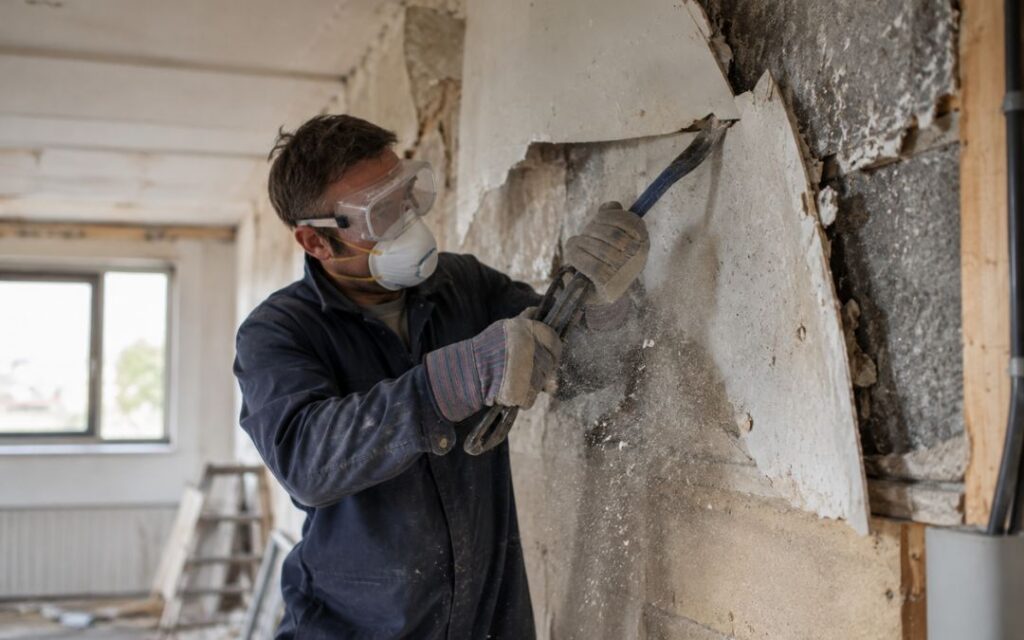
You may disturb an old building material while drilling, renovating, removing flooring, or making a simple repair without realizing it contains asbestos. The concern begins when that material is damaged enough to release asbestos fibers into the air. These fibers are extremely small and can be inhaled without being visible.
Accidentally disturbing asbestos does not automatically mean you will become ill. The level and duration of exposure can vary, and health effects from asbestos exposure generally do not appear immediately. What matters now is limiting further disturbance and preventing dust or debris from spreading.
What Happens When Asbestos Is Disturbed?
When asbestos-containing materials remain intact and in good condition, they are less likely to release fibers. Cutting, drilling, sanding, scraping, breaking, or tearing them can change that. Here is what can happen when disturbed asbestos releases fibers.
Asbestos Fibers Can Become Airborne
Damaging asbestos-containing material can release microscopic fibers into the air. Activities such as drilling or sanding can create dust that contains these fibers.
The concern is inhalation. You may not be able to see or smell asbestos fibers, so the absence of visible dust does not confirm that no fibers were released.
The Fibers Can Spread Beyond the Original Area
Once released, fibers can settle on nearby surfaces or become attached to clothing, tools, and other materials. Moving through the area or disturbing contaminated dust can potentially spread it farther.
For this reason, cleaning up the area like ordinary household dust is not recommended.
You May Not Know Right Away If You Were Exposed
Asbestos exposure generally does not cause immediate symptoms that can tell you whether you inhaled fibers. Health effects associated with asbestos can take many years to develop.
If you think you were exposed, avoid trying to determine your exposure level based on how you feel. A healthcare professional can discuss your specific situation and any appropriate follow-up.
What Should You Do If You Accidentally Disturb Asbestos?
If you suspect you have disturbed asbestos, the immediate priority is to stop creating more dust and limit access to the area.
Stop Work and Leave the Material Alone
Stop cutting, drilling, scraping, sanding, or removing the material. Do not attempt to finish the job simply because only a small section was disturbed.
Keep People Away From the Area
Limit access to the affected space and avoid unnecessary movement through it. This can help reduce the chance of spreading dust to other parts of the home.
Do Not Sweep or Vacuum the Dust
Avoid dry sweeping or using a regular household vacuum on suspected asbestos dust or debris. These methods can disturb fine particles and potentially move them into the air.
Avoid Handling Contaminated Clothing or Materials
If clothing, tools, or other items may have asbestos dust on them, do not shake, brush, or unnecessarily move them. Leave cleanup and handling to people equipped to manage the material appropriately.
How Can You Tell If a Material Contains Asbestos?
You cannot confirm asbestos by appearance alone. Testing is needed to identify asbestos-containing materials.
Consider the Age and Type of Material
Asbestos may be found in older insulation, flooring, ceilings, siding, and other building materials.
Get Suspect Materials Tested
Do not disturb or sample the material yourself. A qualified professional can recommend safe testing and handling.
What Should You Avoid After Disturbing Asbestos?
Once you have stopped the work, avoid actions that could spread dust or disturb the material further.
- Do not continue renovation work in the area.
- Do not dry-sweep visible dust or debris.
- Do not use a regular household vacuum.
- Do not remove suspected asbestos materials yourself.
- Do not move potentially contaminated debris around the home.
When Is Professional Asbestos Abatement Needed?
Professional help is particularly important when disturbed asbestos may have released fibers or when asbestos-containing material needs to be removed.
This can include situations where:
- Suspected asbestos has been broken, cut, or damaged
- Dust or debris has spread beyond the original area
- Damaged material needs to be removed
- A renovation will disturb suspected asbestos
- You cannot determine how far the material or dust has spread
Professionals can assess the affected area, establish appropriate containment, and follow proper procedures for handling and removing asbestos-containing materials.
FAQs About Disturbed Asbestos
What should I do if I accidentally disturbed asbestos?
Stop work and avoid disturbing the material or spreading dust. Keep people away from the area and seek guidance from a qualified asbestos professional before attempting cleanup or removal.
Can disturbed asbestos make you sick immediately?
Asbestos exposure does not typically cause immediate symptoms that can confirm exposure. Health effects associated with asbestos can take many years to develop.
How long do asbestos fibers stay in the air?
The amount of time fibers remain airborne depends on factors such as the material, disturbance, airflow, and surrounding conditions. Some fibers can settle onto surfaces and become airborne again if the dust is disturbed.
Can I clean up disturbed asbestos myself?
It is not advisable to treat suspected asbestos debris like ordinary household dust. Avoid sweeping, dry cleaning, or using a regular vacuum, and consult a qualified professional about safe cleanup.
Do I need asbestos testing after accidentally disturbing a material?
Testing may be appropriate if you need to determine if the material contains asbestos. Do not disturb the material further just to obtain a sample. A qualified professional can advise on the safest approach.
Summing Up
Disturbed asbestos should not be treated like ordinary construction dust. If you accidentally damage a material that may contain asbestos, stop work, keep people away from the area, and avoid actions that could spread dust. A professional assessment can help determine what material is involved and how to handle the affected area.
Need Professional Asbestos Abatement?
Think a material in your home may contain asbestos? We can help with professional asbestos testing and abatement. Contact us to discuss the material and find the right next step.