


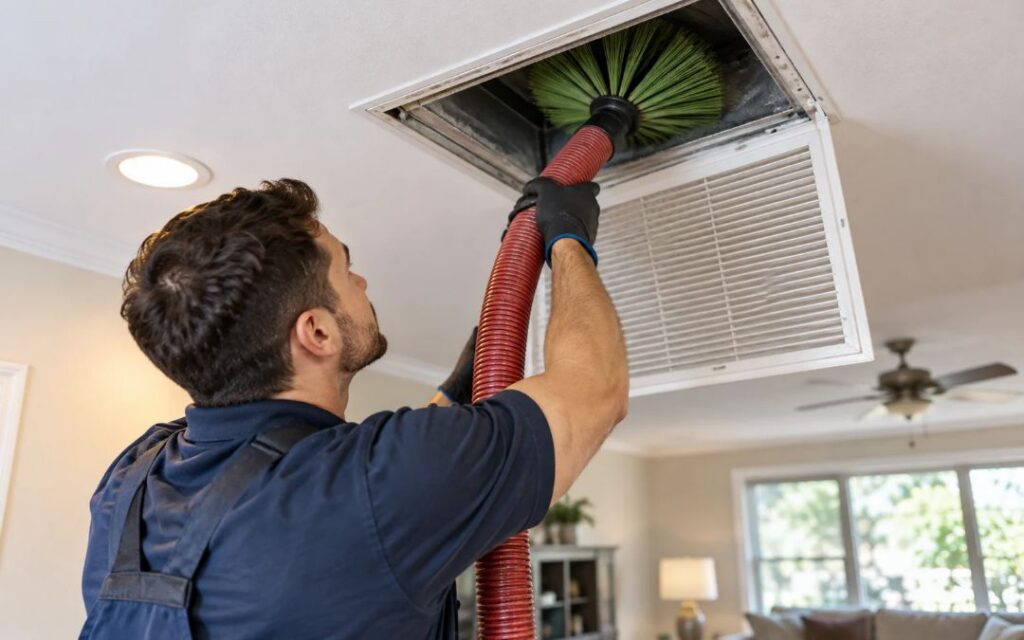
Air duct cleaning is one of those chores that never quite makes the to-do list. The ducts are hidden in walls and ceilings, the air still comes out of the vents, and life is busy. So when someone asks how often should air ducts be cleaned, most homeowners honestly have no idea, and the answers floating around online don’t always agree.
That confusion ends here. Instead of a one-size-fits-all number, you’ll get a practical way to decide based on your home, your household, and the conditions you live with. Below, we break down what the experts say, a simple timing guide for common situations, and the local factors in New Mexico and West Texas that can move your next cleaning up the calendar.
Quick answer: There’s no single required schedule. Industry groups such as the National Air Duct Cleaners Association often suggest every 3 to 5 years, while the EPA recommends cleaning when there’s a specific reason, such as visible mold, pests, or excessive dust coming from vents. Homes with pets, allergies, renovations, or smoke exposure may need it sooner.
What Do the Experts Actually Say?
Here’s where the mixed messages come from.
- The EPA doesn’t recommend routine duct cleaning on a fixed schedule. Instead, it advises considering cleaning when there’s substantial visible mold inside ducts, an insect or rodent infestation, or so much dust and debris that particles blow out of the vents.
- Industry organizations like the National Air Duct Cleaners Association commonly suggest cleaning every 3 to 5 years as a general guideline for typical homes.
Both views make sense together. A fixed interval serves as a reminder, but your home’s conditions should determine the actual timing.
A Simple Timing Guide by Situation
| Your Situation | Suggested Timing |
| Typical home, no pets or allergies | Every 3 to 5 years, or when signs appear |
| Pets that shed heavily | Toward the shorter end of that range |
| Household members with allergies or asthma | Consider more frequent checks and cleaning |
| After remodeling or construction | Once the work is finished |
| After fire or smoke damage | As part of the restoration process |
| Mold found in ducts or HVAC system | Right away, after the moisture source is fixed |
| Moving into a new home | Before or soon after move-in |
Think of this as a starting point, not a rule. Your eyes and nose are often the best guide. If you’re not sure what to look for, our article on signs you need an air duct cleaning covers the most common warning signs.
Local Factors That Mean Cleaning Sooner
Living in the high desert and the Borderland creates conditions that can load your ductwork faster than average.
Dust storms and spring winds. Strong winds carry fine dust that slips through gaps around doors, windows, and returns. Over time, it settles inside your system.
Swamp coolers. Evaporative coolers push moist air through the home. When pads, pans, or ducts stay damp, debris can cling to surfaces and moisture can encourage mold growth.
Wildfire smoke. During wildfire season, smoke particles can drift into homes and settle in ductwork, leaving lingering odors.
Remodeling projects. Drywall dust, sawdust, and renovation debris travel easily through return vents, even with careful cleanup.
Pets and household activity. Pet hair, dander, and everyday dust build up faster in busy households.
When Duct Cleaning Can’t Wait
Some situations call for cleaning regardless of when it was last done.
- After fire or smoke damage. Soot and odor can hide inside ducts long after you clean visible damage. Proper fire damage restoration often includes cleaning the HVAC system so smoke smell doesn’t keep recirculating.
- When mold is present. If mold is growing inside ducts or the air handler, cleaning alone isn’t enough. You need to fix the moisture source, and growth beyond the ducts may require professional mold remediation. Our post on mold in air ducts explains the warning signs.
- After a pest problem. Remove droppings and nesting material, and sanitize the area.
What Can You Do Between Cleanings?
You can’t clean the inside of your ductwork yourself without specialized equipment, but a few habits keep it cleaner for longer:
- Check your HVAC filter monthly and replace it as often as the manufacturer recommends.
- Keep vents and returns clear of furniture, rugs, and dust buildup.
- Vacuum registers and grilles regularly.
- Service your cooler or AC system each season to prevent moisture buildup.
- Seal off vents during renovations to keep construction dust out.
These habits can stretch the time between professional cleanings.
What Happens During a Professional Duct Cleaning?
A thorough cleaning should cover more than just the vent covers. Technicians typically inspect the system, loosen buildup inside the supply and return ducts, and use high-powered vacuum equipment to remove debris. A good provider will also check for signs of moisture or mold and tell you if something needs attention.
Know When It’s Time to Clean Your Air Ducts
So, how often should air ducts be cleaned? Use every 3 to 5 years as a reminder, then let your home’s conditions decide. Visible dust, musty smells, allergy flare-ups, smoke exposure, or a recent remodel are all good reasons to schedule sooner.
American Restoration provides professional air duct cleaning services that remove heavy buildup from supply and return vents for better airflow and cleaner indoor air across New Mexico and West Texas. Call our Albuquerque team at (505) 390-8728 or our El Paso team at (915) 265-5771 to schedule your air duct cleaning and breathe a little easier at home.
Frequently Asked Questions
Is air duct cleaning worth it?
It’s most worthwhile when there’s a clear reason, such as heavy dust, mold, pests, smoke damage, or a recent renovation. In those cases, cleaning can improve airflow and reduce odors and debris.
How long does air duct cleaning take?
Most residential cleanings take a few hours, depending on the home’s size and the number of vents.
Can dirty air ducts make you sick?
Dirty ducts can circulate dust, allergens, and in some cases mold spores, which may aggravate allergies or asthma. Cleaning helps most when the ducts contain significant buildup or contamination.
Do new homes need air duct cleaning?
New construction can leave drywall dust and debris in ducts. Cleaning after move-in can remove what builders left behind.
Should I clean my ducts after a fire?
Yes. Smoke and soot can settle deep in ductwork and keep spreading odor, so duct cleaning is often part of fire damage restoration.