


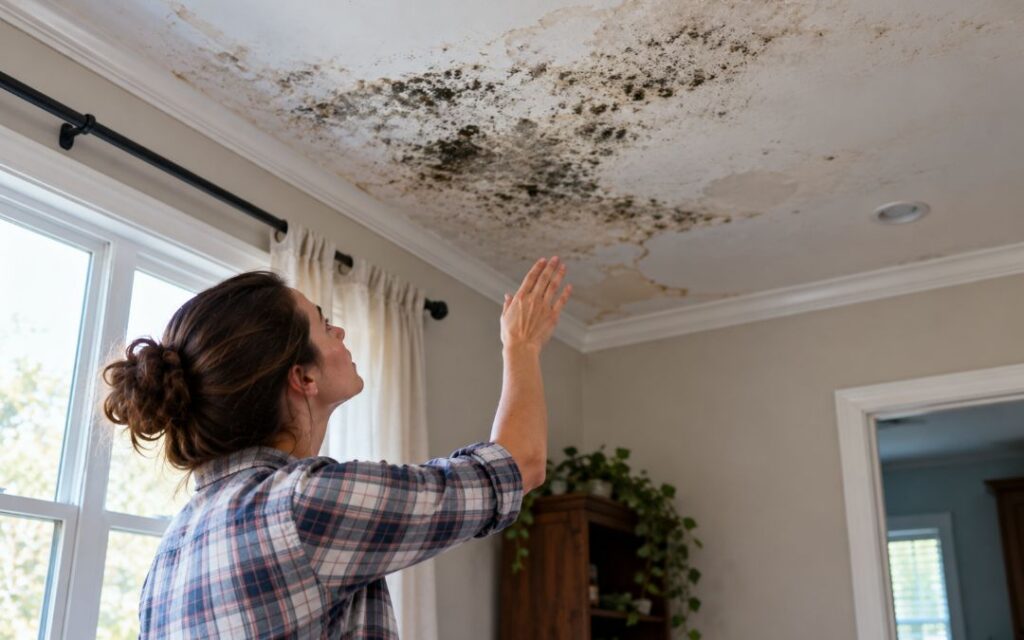
Few things ruin a lazy Sunday like glancing up and spotting dark speckles overhead. Your first instinct is probably to grab a ladder and a spray bottle, and that’s completely understandable. But mold on ceiling surfaces almost always signals something happening above or around it, and wiping it away won’t fix the real problem.
Here’s the helpful part: the ceiling itself leaves clues. The shape, location, and color of the growth can point you straight to the cause. This guide breaks down five common sources of ceiling mold in New Mexico and West Texas homes, how to read the signs, and what it takes to fix each one properly.
Quick answer: Ceiling mold usually comes from roof leaks, attic condensation, bathroom humidity, plumbing leaks above, or HVAC and swamp cooler moisture. Start by stopping the water source, then remove the mold and any damaged drywall.
1. Roof Leaks
When the roof lets water in, the ceiling is often the first place you’ll see it. Flat and low-slope roofs common across the Southwest can hold water after monsoon storms, and small gaps in the membrane, flashing, or around roof penetrations let it seep through.
Clue on the ceiling: Brown water rings with mold forming at the edges, often appearing or growing after rain.
How to fix it:
- Get the roof inspected and repaired first
- Check the attic for wet insulation and damp sheathing
- Replace stained drywall that stays soft or crumbly
Our roof leak detection guide walks through more warning signs to check after a storm.
2. Attic Condensation
Not every ceiling problem involves a leak. On cold nights, warm, moist air from inside the house can rise into a poorly ventilated attic and condense on the cold underside of the roof. That moisture drips onto insulation and the top of your ceiling.
Clue on the ceiling: Faint gray lines or a grid-like pattern that follows ceiling joists, or scattered spotting across a wide area near exterior walls.
How to fix it:
- Improve attic ventilation with soffit and roof vents
- Seal gaps around light fixtures, pipes, and attic hatches that let warm air escape upward
- Add or replace insulation where it’s thin or compressed
3. Bathroom Humidity
Showers release a surprising amount of steam, and since warm air rises, ceilings take the hit first.
Clue on the ceiling: Small black or gray dots concentrated above the shower or tub, sometimes spreading toward the corners.
How to fix it:
- Run the exhaust fan during every shower and for a while afterward
- Make sure the fan vents outdoors, not into the attic
- Use a moisture-resistant paint designed for bathrooms after the mold is removed
4. Plumbing Leaks From Above
In two-story homes, a slow leak from an upstairs bathroom, toilet seal, or supply line can quietly soak the ceiling below. Pipes running through ceiling cavities can also develop pinhole leaks.
Clue on the ceiling: A spot directly under a bathroom, kitchen, or laundry area, often with sagging drywall, peeling paint, or stains that grow even without rain.
How to fix it:
- Have a plumber locate and repair the leak
- Check for soft or bulging drywall, which may need replacement
- Dry the ceiling cavity thoroughly before closing it up
5. HVAC and Swamp Cooler Moisture
Evaporative coolers add moisture to indoor air, and rooftop units can overflow or leak into the home. Central AC systems can also cause ceiling mold when condensate lines clog or ducts collect condensation.
Clue on the ceiling: Mold or stains clustered around vents, registers, or directly under rooftop units.
How to fix it:
- Inspect and service the cooler pan, pads, and float valve
- Clear AC condensate lines and check for duct sweating
- Consider professional air duct cleaning if musty air comes through the vents
Can You Clean Ceiling Mold Yourself?
Sometimes. A small patch on a painted bathroom ceiling, caused by steam and caught early, can often be cleaned once you fix the moisture issue. A professional is the better call if:
- The area is larger than a few square feet
- Drywall is soft, sagging, or stained through
- The mold keeps returning after cleaning
- The growth is linked to a roof or plumbing leak
- You have a textured or popcorn ceiling in an older home
That last point matters. The EPA notes that some textured ceilings, especially in homes built before the 1980s, may contain asbestos. Scraping them can release fibers, so test first, then hire a professional for asbestos abatement if needed.
Stay Safe When Working Overhead
Spores and debris fall straight down, so wear goggles, gloves, and an N95 respirator, cover the floor and furniture with plastic, and avoid dry scraping.
Fix Mold on Ceiling Problems at the Source
Mold on ceiling surfaces is your home’s way of saying moisture has found a path inside. Repair the source, remove the growth, and replace damaged drywall to stop the problem for good.
American Restoration’s IICRC-certified crews track down the moisture, contain the area, and complete professional ceiling mold remediation for homes across New Mexico and West Texas. When ceilings need more than cleaning, our repairs and rebuilds team replaces damaged drywall and finishes the job, and our water damage restoration crew handles any drying first. Call (505) 390-8728 in Albuquerque or (915) 265-5771 in El Paso, or have our team inspect your ceiling for free and get a clear plan to fix it.
Frequently Asked Questions
Is mold on the ceiling dangerous?
It can be, especially for people with allergies, asthma, or weakened immune systems. Spores from overhead growth can drift down into living spaces.
Why does mold keep showing up in the same spot on my ceiling?
A recurring spot usually means an ongoing moisture source, such as a roof leak, condensation, or a plumbing problem above. Cleaning alone won’t stop it.
Will I need to replace my ceiling drywall?
If the drywall is soft, sagging, or stained through, you’ll usually need to replace it. Surface mold on sound, dry drywall may be cleanable.
How can I tell if ceiling mold is from a leak or condensation?
Leak-related mold often appears with water rings or stains in one area. Condensation tends to create widespread spotting or lines that follow ceiling joists.
Does homeowners insurance cover ceiling mold?
It depends on the cause. Mold from a sudden covered leak may be included, while mold from neglect or humidity usually isn’t.