


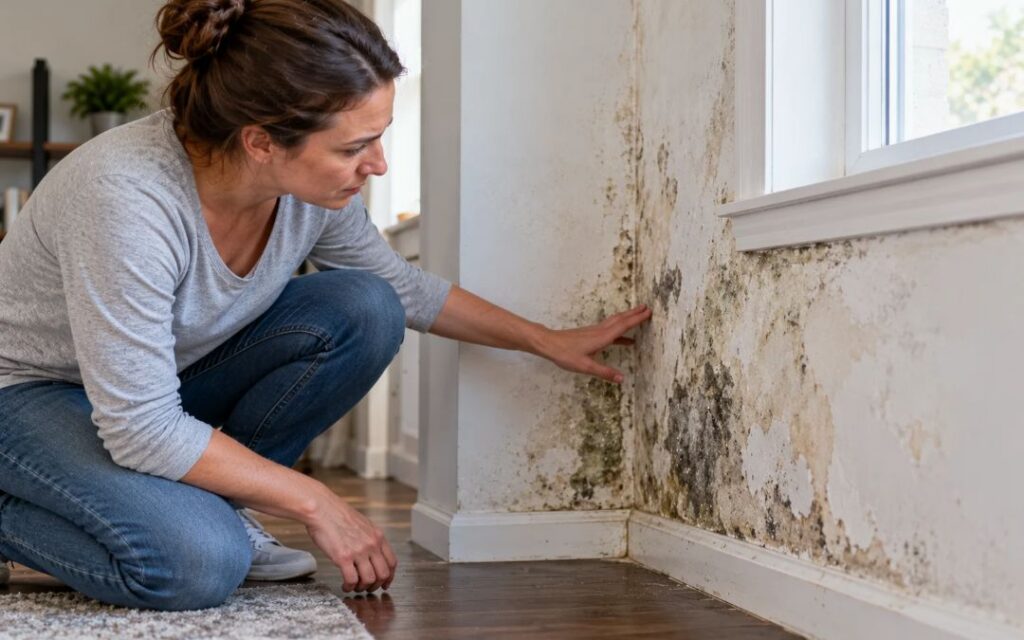
Most mold warnings focus on the black stuff, so a fuzzy white patch on a basement wall or attic beam can seem almost harmless. It’s an easy assumption to make. But white mold is still mold, and it often goes unnoticed precisely because it blends in with drywall, wood, and dust.
The good news? Figuring out what you’re looking at is easier than you might think. With a few simple at-home checks, you can tell white mold apart from look-alikes, understand the risks, and know when to clean it yourself versus calling in a pro. Here’s what homeowners in New Mexico and West Texas should know.
Quick answer: White mold is a fuzzy or powdery growth that appears on damp organic materials like wood, drywall, and fabric. It can trigger the same health concerns as other molds. If you find it, fix the moisture source, contain the area, and have professionals remove larger patches.
What Is White Mold?
White mold isn’t a single species. Several common household molds can look white, especially early in their growth before they develop darker spores. Some stay white, while others gradually turn green, gray, or black.
Because it’s pale, white mold is easy to mistake for dust, paint residue, or mineral deposits. That’s exactly why it can spread for weeks before anyone takes it seriously.
Is It White Mold or Something Else?
Two common look-alikes fool many homeowners: efflorescence and mildew.
- Efflorescence is a salty mineral deposit left behind when water moves through concrete, brick, or stucco and evaporates. It’s crystalline and only appears on masonry.
- Mildew is a type of mold that stays flat on the surface, often in bathrooms and on window sills. It’s typically powdery and easier to clean.
- White mold is fuzzy or cottony, grows on organic materials, and often comes with a musty smell.
Three Quick Tests You Can Do at Home
- The water test. Spray a little water on the spot. Efflorescence usually dissolves, while mold stays put.
- The touch test. Wearing gloves, press the patch with a tool. Efflorescence crumbles into a hard powder. Mold feels soft or fuzzy and may smear.
- The location and smell test. Mold grows on wood, drywall, insulation, and fabric. Efflorescence sticks to concrete and masonry. A musty odor points toward mold.
If the results are mixed or the area is large, a professional inspection gives you a clear answer.
Where Does White Mold Grow in a Home?
White mold loves dim, damp spaces with little airflow. Common spots include:
- Attics: on roof sheathing and rafters, especially after roof leaks or poor ventilation
- Crawl spaces and basements: on wooden joists, stored boxes, and drywall
- Behind furniture: on walls where airflow is blocked
- HVAC systems: inside ductwork where condensation builds up
- Stored fabrics and leather: in closets, garages, and storage units
During monsoon season, sudden humidity spikes can wake up dormant growth in spaces that stay dry most of the year.
Is White Mold Dangerous?
Mold color doesn’t tell you how harmful it is. White mold can produce the same allergens and irritants as darker molds. According to the EPA, mold exposure can cause allergic reactions, asthma attacks, and irritation of the eyes, skin, nose, and throat in sensitive people.
White mold can also damage your home. Left alone on wood framing or subfloors, it breaks down the material it grows on and weakens it over time.
Who should be extra careful:
- Children and older adults
- People with asthma or allergies
- Anyone with a weakened immune system
What Should You Do If You Find White Mold?
Act on both the mold and the moisture feeding it.
Step 1: Find the water source. Look for leaks, condensation, or poor ventilation nearby. Mold will keep coming back if the moisture stays.
Step 2: Limit disturbance. Avoid dry brushing or sweeping, which can release spores into the air. Turn off fans or HVAC systems that blow across the area.
Step 3: Decide whether to DIY. You can often clean small patches on hard, non-porous surfaces with detergent and water while wearing gloves, goggles, and an N95 respirator. Porous materials like drywall, insulation, and carpet usually need to be removed.
Step 4: Call a professional for larger problems. Widespread growth, mold in HVAC systems, or growth after water damage calls for containment and specialized equipment. Our guide on 10 steps to safe mold remediation shows what a professional process looks like.
Step 5: Prevent a comeback. Keep indoor humidity low, improve airflow in closets and attics, and address leaks quickly.
Can White Mold Spread Through Air Ducts?
Yes. If white mold grows inside your HVAC system, the airflow can carry spores into every room. A musty smell when the system kicks on is a common clue. Professional air duct cleaning removes buildup and improves indoor air quality once you resolve the moisture issue.
Stop White Mold Before It Spreads
White mold may look less alarming than black mold, but it deserves the same attention. Identifying it early, fixing the moisture behind it, and removing it properly keeps your home and your family healthier.
American Restoration’s IICRC-certified technicians handle inspection, containment, and complete white mold removal and remediation across New Mexico and West Texas. If a leak or flood caused the growth, our water damage restoration team also handles drying. Reach our Albuquerque mold team at (505) 390-8728 or our El Paso mold team at (915) 265-5771, or schedule a free mold assessment to get answers before the problem grows.
Frequently Asked Questions
Is white mold worse than black mold?
Neither color is automatically worse. Both can cause health issues and property damage, so address any indoor mold growth promptly.
Can white mold turn black?
Yes. Some molds start out white and darken as they mature and produce spores.
Does bleach kill white mold?
Bleach may remove surface growth on hard surfaces, but it doesn’t reach mold inside porous materials. Fixing the moisture source matters more than the cleaner you use.
What does white mold on wood look like?
It usually appears as fuzzy, cottony, or powdery white patches on beams, joists, or furniture. The wood may feel soft or damp underneath.
Can I sleep in a room with white mold?
It’s best to avoid it, especially if you have allergies or asthma. Keep the door closed and address the mold as soon as possible.