


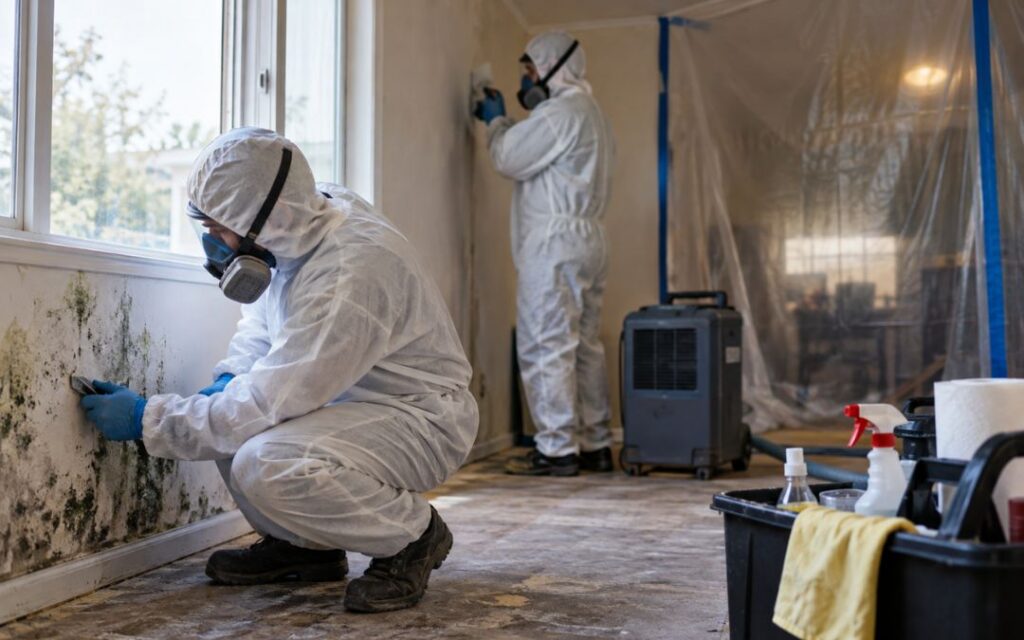
You notice mold on a wall, around a window, or under a sink. Your first instinct may be to grab a cleaner and scrub it away. But visible mold is only part of the problem. You also need to find out why it appeared, check for hidden moisture, and make sure the area is properly cleaned and dried.
Following the right safe mold remediation steps helps you address the mold growth and the conditions that caused it. Here is what to consider from the first inspection through the final cleanup.
Safe Mold Remediation: 10 Steps to Follow
The safest approach is to handle mold in the right order. Start by finding the moisture source and checking how far the mold has spread. Then move through containment, removal, cleaning, drying, and prevention.
1. Identify What Is Causing the Mold
Where is the moisture coming from?
Start by finding the source of moisture. Common causes include leaking pipes, roof leaks, flooding, condensation, high humidity, and poor ventilation.
Check nearby walls, ceilings, flooring, cabinets, and plumbing. Mold cleanup without fixing the moisture source may only provide a temporary solution.
2. Check How Far the Mold Has Spread
Is visible mold the whole problem?
Not always. Hidden mold may be growing behind drywall, underneath flooring, inside cabinets, or around plumbing.
Musty odors, water stains, bubbling paint, warped materials, and damp areas can point to hidden moisture or mold damage. If mold appeared after a leak or flooding, inspect beyond the area you can see.
3. Decide If the Mold Is Safe to Handle Yourself
Can you remove mold yourself?
A small, isolated area on a suitable surface may be manageable with careful cleaning. Larger areas, recurring growth, extensive water damage, or contaminated porous materials need more caution.
If you cannot determine the extent of the problem, hiring a professional mold remediation company may be the safer option.
4. Keep People and Pets Away From the Area
How do you protect your household during mold cleanup?
Keep people and pets away from the affected space during mold cleanup. Avoid unnecessary movement around the area, as disturbing mold can spread particles to other parts of the home.
Larger remediation projects may require the space to remain isolated throughout the work.
5. Contain the Affected Area
How do you stop mold from spreading?
Containment separates the affected space from clean areas of the home. The level needed depends on the size and location of the mold problem.
Larger projects may use physical barriers and negative air pressure to limit the movement of airborne particles during mold removal.
6. Remove Mold-Damaged Materials
What needs to be removed instead of cleaned?
Porous materials such as damaged drywall, insulation, and carpet may need to be removed if mold has penetrated them.
Materials that can be restored should be cleaned using methods suitable for the surface. Removing damaged materials can also expose moisture that needs to be addressed.
7. Clean the Remaining Surfaces Properly
How should mold be cleaned after damaged materials are removed?
Cleaning methods should match the material and level of contamination. Hard, nonporous surfaces may be cleaned and treated, while deeply contaminated porous materials may need removal.
Simply wiping away mold or painting over a stain does not solve the problem. Proper mold remediation should address the affected surfaces and remaining contamination.
8. Dry the Area and Remove Excess Moisture
How do you make sure the area is actually dry?
A surface can feel dry while moisture remains inside drywall, flooring, or other building materials. Moisture meters can help identify damp areas that are difficult to detect by touch.
Air movers and dehumidifiers can help improve airflow and remove excess moisture, especially after water damage.
9. Fix the Underlying Water or Moisture Damage
How do you prevent mold from coming back?
Fix the source of the moisture before considering the remediation complete. This may mean repairing leaking pipes, roof damage, drainage problems, ventilation issues, or HVAC-related moisture.
Addressing moisture damage is essential for preventing new mold growth after cleanup.
10. Inspect the Area and Prevent Future Mold Growth
How do you know the remediation worked?
After cleanup and drying, check for visible mold, lingering moisture, stains, or musty odors. Inspect nearby areas too, especially if hidden moisture was involved.
Keep indoor humidity under control and improve ventilation in moisture-prone areas such as bathrooms, kitchens, and basements. These simple mold prevention measures can help reduce the chance of recurring growth.
Frequently Asked Questions
Can I remove mold myself?
Small areas of mold on suitable surfaces may sometimes be handled with careful cleaning. Larger, recurring, or hidden mold problems are better assessed by a professional.
How do I know if mold is hidden?
Musty odors, water stains, bubbling paint, warped materials, and damp areas can indicate hidden mold or moisture. Mold may also develop behind walls, under flooring, and around plumbing.
How do you safely remove mold from drywall?
If mold has penetrated drywall, the affected section may need to be removed instead of simply cleaned. The surrounding area should then be cleaned and thoroughly dried.
How long does mold remediation take?
The timeline depends on the size of the affected area, the materials involved, and how much moisture is present. Small problems may take less time, while extensive water damage can require a longer drying and repair process.
How do you prevent mold from coming back?
Fix the moisture source, dry affected materials completely, control indoor humidity, and improve ventilation in areas where moisture builds up. Regularly checking problem areas can also help catch moisture issues early.
Summing Up
Safe mold remediation involves more than removing visible growth. You need to find the moisture source, determine the extent of the problem, contain the area, remove damaged materials, and properly clean and dry the space.
Taking these steps addresses both the mold and the conditions that caused it. If the problem is extensive, hidden, or keeps returning, professional remediation may be the better option.
Need Professional Mold Remediation?
American Restoration provides mold remediation services to help identify mold problems, remove affected materials, and restore your home. Contact us to discuss your situation and the next steps.