


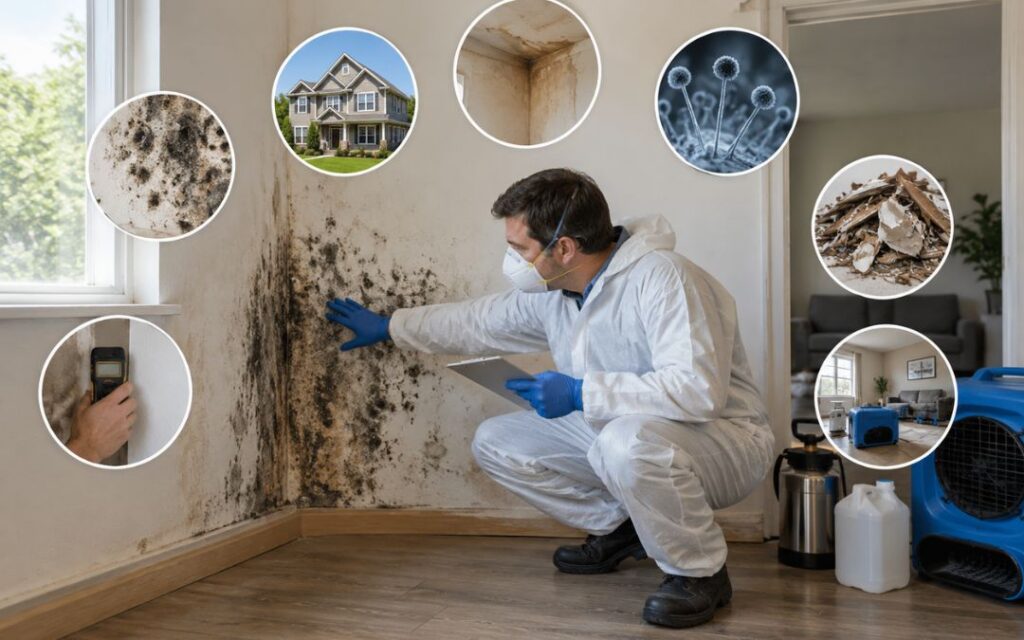
Mold removal is not priced the same for every home. A small patch on a bathroom wall may require a very different amount of work than mold hidden behind drywall after a major water leak.
Before you request an estimate, it helps to understand what goes into the price. The mold removal cost depends on the extent of the problem, the materials affected, the work needed to remove it, and what caused the growth in the first place.
What Affects Mold Removal Cost?
Several details can change the final price of mold removal. These seven factors are among the most important to consider when comparing estimates.
1. Size of the Affected Area
The amount of mold present is one of the first things that affects cost. A small, isolated area usually takes less time, labor, and equipment to address than mold covering several rooms.
Larger infestations may also require more extensive containment, additional workers, and longer cleaning and drying times. An inspection can help determine the actual scope before work begins.
2. Location of the Mold
Where the mold is growing can make removal more complicated.
Mold on an exposed, hard surface is generally easier to access than mold behind walls, under flooring, inside ceilings, or in crawl spaces. Difficult-to-reach areas may require materials to be opened or removed before the affected area can be properly cleaned.
The location also affects how the area is contained during remediation.
3. Type of Material Affected
The material where mold is growing also matters. Nonporous surfaces such as tile, glass, or certain metals may be easier to clean when they are in good condition.
Porous materials can be more difficult to restore because mold and moisture may penetrate below the surface. Depending on the extent of contamination, drywall, insulation, carpet, or other materials may need to be removed and replaced.
This means your mold removal cost may include both cleanup and material replacement.
4. Source of the Moisture
Mold does not appear without a moisture problem. A leaking pipe, roof leak, flooding, condensation, or high indoor humidity may be responsible.
If the source has not been fixed, mold can return after cleanup. The total project may therefore include plumbing repairs, roof repairs, water extraction, structural drying, or other work needed to address the moisture.
Finding and correcting the source is an important part of effective mold remediation.
5. Extent of Water Damage
Mold that develops after water damage may involve more than the visible growth. Water can move into walls, floors, insulation, and other building materials, creating additional areas that need inspection and drying.
If materials remain wet, they may require water extraction and professional drying before mold cleanup can be completed. The more extensive the water damage, the more labor and equipment the project may require.
6. Containment and Equipment Needed
Larger or more complicated mold problems may require specialized equipment and additional containment.
Professionals may use physical barriers to separate the affected area from clean spaces. Depending on the project, equipment such as air filtration devices, dehumidifiers, air movers, and moisture meters may also be needed.
The amount of equipment, how long it is needed, and the level of containment required can all contribute to the overall cost.
7. Repairs and Restoration After Removal
Mold removal does not always end once the mold is cleaned. If contaminated materials had to be removed, the affected area may need repairs or rebuilding.
This could include replacing drywall, insulation, flooring, cabinets, or other materials. Painting, finishing, and other restoration work may also be needed to return the space to its previous condition.
For this reason, ask an estimate to clearly separate mold remediation, repairs, and replacement costs so you understand what is included.
How to Compare Mold Removal Estimates
The lowest estimate is not always the most useful comparison. Look at what each company plans to do and what is included in the quoted price.
Ask questions such as:
- How extensive is the mold growth?
- Will hidden moisture be checked?
- Which materials need to be removed?
- What containment will be used?
- Is drying included?
- Are repairs included or priced separately?
- What happens if additional mold is discovered?
A detailed estimate can help you understand why one project costs more than another.
Frequently Asked Questions
How much does mold removal cost?
There is no single price for every mold removal project. The cost depends on factors such as the size and location of the mold, affected materials, moisture damage, equipment, and repairs required.
Is mold removal covered by homeowners insurance?
Coverage depends on your policy and the cause of the mold. Mold connected to a covered water damage event may have different coverage from mold caused by long-term maintenance issues. Check your policy and speak with your insurance provider.
Is mold remediation more expensive than mold removal?
The terms are often used interchangeably, but remediation can involve more than physically removing mold. A remediation project may include containment, moisture control, cleaning, drying, and restoration, which can affect the total cost.
Can I reduce mold removal cost by doing it myself?
For a small, manageable area, some homeowners may choose to handle basic cleaning themselves. Larger infestations, hidden mold, extensive water damage, or contaminated materials can require specialized equipment and professional remediation.
Why does hidden mold cost more to remove?
Hidden mold often requires additional inspection and access work before it can be removed. Walls, ceilings, flooring, or other materials may need to be opened or removed, increasing labor and restoration costs.
Final Words
Mold removal cost depends on much more than the amount of mold you can see. The size and location of the problem, affected materials, moisture source, water damage, equipment, and repairs can all influence the final price.
Understanding these factors makes it easier to review estimates and ask the right questions before work begins. A proper inspection can also help identify hidden moisture and determine the full scope of the project.
Need Professional Mold Removal?
American Restoration can help assess mold problems, remove affected materials, and restore areas damaged by mold and moisture. Contact us to discuss your home and get started with an appropriate remediation plan.