


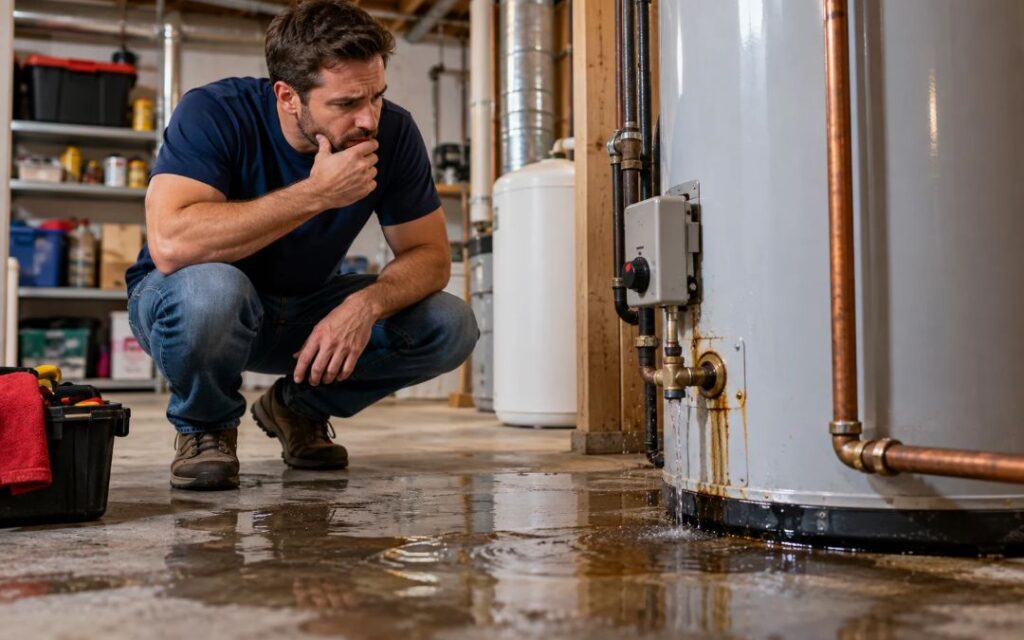
Your sock lands in a cold puddle in the garage, or a damp ring shows up on the utility closet floor. Either way, a water heater leaking is easy to shrug off and hard to ignore for long. A small drip today can soak drywall, flooring, and framing by next month.
Here’s what makes it manageable: most leaks come from a short list of causes. By the end of this guide, you’ll know how to pinpoint the source, whether it needs a repair or a replacement, and what to do in the first few minutes.
Quick answer: A water heater usually leaks because of loose pipe connections, a faulty temperature and pressure relief valve, a worn drain valve, sediment buildup, or a corroded tank. Turn off the power or gas and the cold water supply first, then figure out where the water is coming from.
Is It Really a Leak?
Rule out condensation first. Moisture can form on the outside of a tank and drip down, especially on gas units. If the puddle stays small and fades once the tank heats up, that’s likely condensation. A real leak keeps growing, leaves rust stains, or drips from one specific spot.
Where Is the Water Coming From?
Dry the area, wait a few minutes, and watch where moisture returns.
| Leak Location | Likely Cause | Usually Fixable? |
| Top of the tank | Loose inlet or outlet connections | Yes |
| Side pipe near the top | Temperature and pressure relief valve | Often |
| Near the bottom spigot | Drain valve | Yes |
| Bottom of the tank | Sediment damage or corrosion | Often not |
| Pooling under the tank with rust | Cracked or corroded tank | No, replacement needed |
1. Loose Inlet and Outlet Connections
The inlet and outlet sit on top of the tank, and constant heating and cooling can loosen their fittings.
Signs to look for:
- Water dripping from the top of the unit
- Corrosion or mineral buildup around fittings
Fixable? Usually. Tightening a fitting or replacing a connector often solves it.
2. Faulty Temperature and Pressure Relief Valve
The T&P relief valve is a safety feature that releases water when tank temperature or pressure climbs too high. A leak means the valve is worn or the tank is building excess pressure.
Signs to look for:
- Water dripping from the discharge pipe on the side of the tank
- Hissing or occasional spurts of hot water
Fixable? Often, but never cap or plug this valve. A plumber can test it and check whether the issue is water pressure or the thermostat setting.
3. Worn Drain Valve
The spigot near the bottom of the tank is used for flushing sediment. Plastic drain valves, especially, can wear out over time.
Signs to look for: A slow drip or moisture around the spigot.
Fixable? Yes. A drain valve is an inexpensive part to replace.
4. Sediment Buildup From Hard Water
Many parts of New Mexico and West Texas have hard water, which leaves minerals behind as it heats. That sediment settles at the bottom and wears on the tank lining.
Signs to look for:
- Rumbling or popping sounds when the heater runs
- Leaks starting at the bottom of the tank
Fixable? Early on, regular flushing can help. Once it causes a leak at the bottom, replacement is usually safer.
5. A Corroded or Cracked Tank
Tank heaters contain an anode rod that attracts corrosion so the tank doesn’t. Once that rod wears away, the tank rusts and can eventually crack or develop pinholes.
Signs to look for:
- Rust-colored water or rust streaks on the tank
- Water pooling directly beneath the heater
- A heater nearing or past the lifespan in its manual
Fixable? No. A leaking tank body means you need to replace the heater.
What Should You Do Right Now?
Here’s the order that limits damage:
- Cut the energy source. For an electric heater, switch off the breaker. For a gas heater, turn the control knob to the off or pilot setting.
- Shut off the cold water supply. Turn the valve on the pipe feeding the top of the tank.
- Protect the area. Move boxes and rugs away from the water.
- Be careful with hot water. Tank water can cause burns, so let it cool before draining.
- Document the damage. Photos help with insurance and repair decisions.
- Call a plumber for the heater and a restoration team for the water damage.
That last step matters. Fixing the heater stops new water, but it doesn’t dry the drywall and subfloor that already got wet. Heaters often sit in closets and utility rooms with little airflow, and the EPA advises drying wet materials within 24 to 48 hours to help prevent mold growth. You can also review other common causes of water damage in your home to catch problems early.
Don’t Let a Water Heater Leaking Turn Into a Bigger Problem
A water heater leaking is a warning you can act on today. Shut it down, find the source, and dry the area before moisture spreads.
When water has already soaked the space around your heater, American Restoration’s IICRC-certified team provides 24/7 water damage cleanup and drying across New Mexico and West Texas. If moisture has led to growth, we also handle mold removal, and our crews can rebuild damaged walls and flooring through our repairs and rebuilds service. Call our Albuquerque restoration crew at (505) 390-8728 or our El Paso restoration crew at (915) 265-5771, or ask for a free water damage inspection and find out how far the water really traveled.
Frequently Asked Questions
Is a leaking water heater dangerous?
It can be. Leaks near electrical parts or gas lines create safety risks, and a faulty T&P valve may signal dangerous tank pressure.
Can I still use my water heater if it’s leaking?
It’s best not to. Running it can worsen water damage and create safety hazards.
Should I repair or replace my leaking water heater?
Leaks from fittings, drain valves, or the T&P valve are often repairable. A leak from the tank body itself almost always means replacement.
Does homeowners insurance cover water heater leaks?
Many policies cover sudden water damage from a failed heater, but not the heater itself or damage from neglect. Check your policy.
How can I prevent my water heater from leaking?
Flush the tank periodically, check the anode rod, test the T&P valve, and inspect fittings. Your owner’s manual lists the maintenance schedule.