


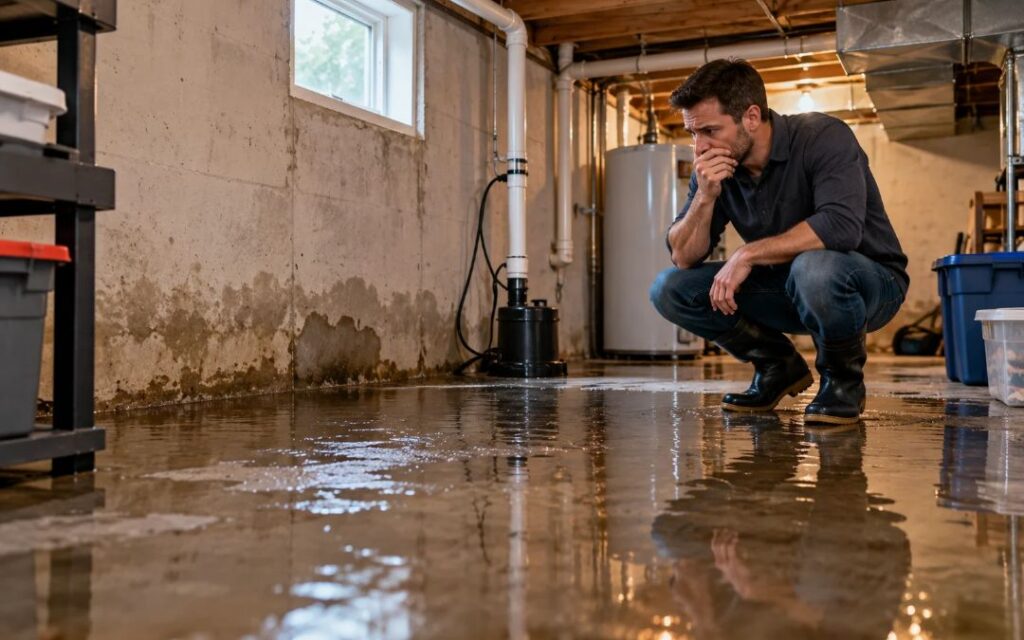
Nobody plans for the moment they open the basement door and hear water sloshing below. It’s stressful, messy, and always badly timed. Basement flooding can catch any homeowner off guard, even in a dry climate where rain feels rare.
The good news is that most floods come from a handful of predictable sources, so you can prevent many and respond quickly to the rest. Ahead are the five most common causes in New Mexico and West Texas homes, the first steps to take, and the mistakes that turn a cleanup into a rebuild.
Quick answer: Basement flooding is most often caused by heavy rain and poor drainage, clogged gutters and downspouts, sewer backups, burst pipes or failed appliances, and foundation cracks or leaky window wells.
1. Monsoon Rain and Poor Yard Drainage
Dry, hard-packed soil doesn’t absorb water quickly. When a monsoon dumps heavy rain fast, runoff heads for the lowest point it can find, and if your yard slopes toward the house, that point is your foundation.
Red flag: Puddles that form near the foundation after every storm.
Prevent it:
- Make sure soil slopes away from the house
- Keep landscaping beds from trapping water against walls
- Clear drainage paths and swales before monsoon season
2. Clogged Gutters and Short Downspouts
Gutters move roof water away from your home. When they clog, water spills over and soaks the ground beside the foundation. Downspouts that end too close to the house cause the same problem.
Red flag: Water stains or erosion directly beneath the gutter line.
Prevent it:
- Clean gutters at least twice a year
- Add extensions so downspouts discharge several feet from the house
- Check that splash blocks haven’t shifted out of place
3. Sewer Line Backups
Tree roots, grease buildup, or an overloaded municipal line can force wastewater back up through floor drains, the lowest toilet, or a basement shower.
Sewage water is contaminated, so keep people and pets away. Professional biohazard cleanup ensures the space is properly sanitized, not just dried.
Red flag: Slow drains, gurgling toilets, or sewer odors coming from floor drains. These signs your residential sewerage system needs attention are worth knowing before a backup happens.
4. Burst Pipes and Appliance Failures
Not every basement flood starts outside. Pipes in unheated spaces can freeze and burst during cold snaps, and the region sees plenty of freezing winter nights. Water heaters, washers, and sump pumps in basements can also fail without warning.
Red flag: Rust on the water heater, bulging supply hoses, or pipes running along cold exterior walls.
Prevent it:
- Insulate exposed pipes before winter
- Replace rubber washer hoses with braided steel lines
- Test your sump pump each season if you have one
5. Foundation Cracks and Window Wells
Concrete shifts and settles over time, leaving small cracks that let water seep in when the soil outside gets saturated. Basement window wells can also fill with water during storms if their drains are clogged or covers are missing.
Red flag: Damp streaks on basement walls, white mineral residue, or water pooling below windows.
Prevent it:
- Seal small cracks and have larger ones checked by a professional
- Clear debris from window wells and install covers
For more clues that water is getting in, review our guide to signs of water damage in a basement.
What Should You Do First When Your Basement Floods?
The first hour shapes how much you can save.
Do:
- Shut off power to the basement at the breaker if you can reach it without stepping into water
- Stop the water source by closing the main shutoff valve if a pipe or appliance is leaking
- Take photos and video of the water, damaged items, and the source before moving anything
- Move valuables and dry items to higher ground
- Call your insurance company and a professional restoration team
Don’t:
- Walk into standing water if outlets, cords, or appliances are submerged
- Use a household vacuum to remove water
- Touch or clean sewage without protective gear
- Wait for things to dry on their own
Speed matters because moisture spreads into drywall, carpet, and framing. The EPA advises drying wet materials within 24 to 48 hours to help prevent mold growth. If you’ve already noticed a musty smell, professional mold remediation may be needed alongside the cleanup.
Does Homeowners Insurance Cover Basement Flooding?
It depends on the cause. Standard homeowners policies often cover sudden, accidental water damage, like a burst pipe. Surface flooding usually requires a separate flood insurance policy, and sewer backups often need a specific endorsement. Ask your agent about gaps before the next storm.
Get Help Fast When Basement Flooding Hits
Basement flooding never gets better on its own. The faster you remove water and dry the space, the more you can save.
American Restoration’s IICRC-certified crews respond 24/7 with water extraction, structural drying, and full cleanup, and our team can handle repairs and rebuilds if walls or flooring need replacing. Get emergency water damage restoration by calling our Albuquerque location at (505) 390-8728 or our El Paso location at (915) 265-5771. For non-emergencies, request a callback from our water damage team, and we’ll help you plan your next move.
Frequently Asked Questions
How do I stop water from coming into my basement during heavy rain?
Start by directing water away from the house with proper grading, clean gutters, and downspout extensions. Sealing foundation cracks and covering window wells adds another layer of protection.
Is it safe to stay in the house if the basement floods?
Often yes, if the water is clean, the electrical system is unaffected, and the rest of the home is dry. Sewage water or electrical hazards mean you should stay out until professionals assess the space.
How long does it take to dry out a flooded basement?
Professional drying usually takes several days, depending on how much water entered and what materials got wet. Moisture readings confirm when the space is truly dry.
Can I save carpet after basement flooding?
Carpet soaked by clean water can sometimes be dried and saved if handled quickly. Remove and replace carpet exposed to sewage or floodwater.
Should I pump water out of my basement myself?
You can remove small amounts of clean water with a wet vacuum once the power is off. Large volumes, contaminated water, or water near electrical systems call for a professional team.