


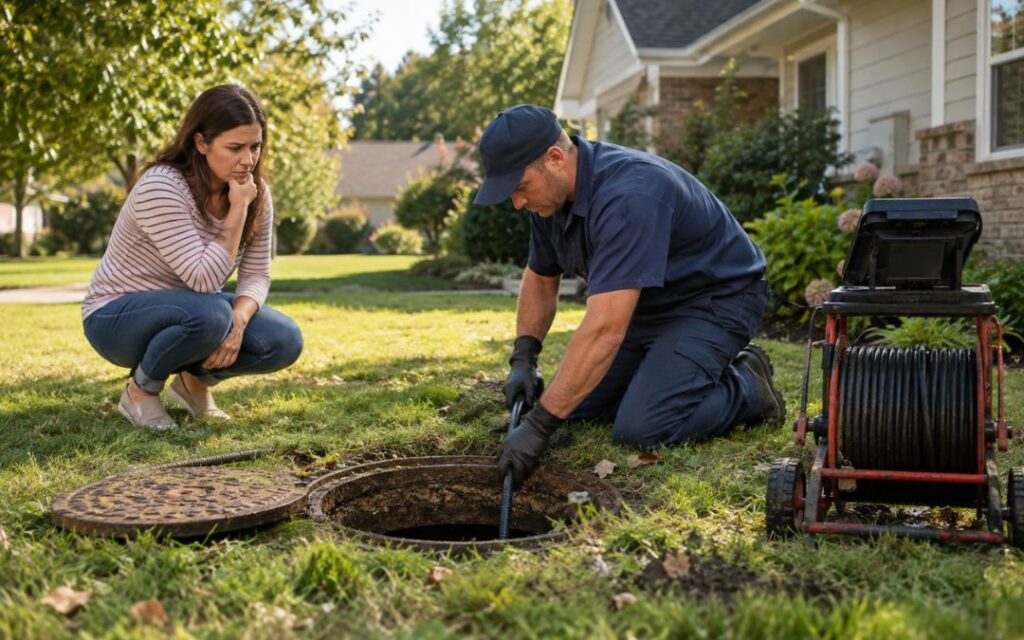
A sewer problem rarely starts with a major backup. You might first notice several drains slowing down, a toilet gurgling when another fixture is running, or an unpleasant smell coming from a drain. These changes can seem minor, but they may point to a problem farther along the sewer line.
Knowing the signs your sewer system needs attention can help you recognize a developing problem before wastewater enters your home.
What Are the Signs Your Sewer System Needs Attention?
A single slow drain does not automatically mean there is a problem with your sewer line. The bigger concern is when drainage issues keep returning, affect several fixtures, or appear alongside other warning signs.
1. Multiple Drains Are Draining Slowly
A slow kitchen or bathroom drain may simply have a local clog. When several drains throughout your home start slowing down at the same time, the issue may be farther along in the plumbing system.
A partially blocked sewer line can restrict wastewater from leaving the home normally. If several drains remain slow after individual clogs have been cleared, the sewer line may need to be checked.
2. Your Toilet Gurgles or the Water Level Changes
A toilet that gurgles when you run the sink, shower, or washing machine can indicate that air or water is not moving normally through the plumbing.
You may also notice the water level in the bowl rising or falling without an obvious reason. These changes do not automatically mean the sewer line has failed, but repeated toilet activity can be a warning sign when combined with slow drains or backups.
3. Drains or Toilets Keep Backing Up
An occasional clogged toilet or sink is not unusual. Recurring backups are more concerning, especially if the same fixtures keep having problems after they have been cleared.
Pay particular attention when more than one fixture starts backing up. A problem affecting multiple fixtures may be located farther down the drainage system rather than in one individual sink or toilet.
4. You Notice a Persistent Sewage Smell
A sewage odor around drains, bathrooms, or outside near the sewer line should not be ignored if it keeps returning.
There can be simple reasons for an unpleasant drain smell, such as a dry drain trap. But when the odor is persistent or appears alongside slow drainage, gurgling, or backups, it is worth having the source investigated.
5. Water or Sewage Backs Up Into the Home
Wastewater appearing around a floor drain, toilet, shower, or another low point in the home is a serious warning sign.
At this point, the issue is no longer just a plumbing concern. Contaminated water can spread across flooring and reach drywall, baseboards, furniture, and other materials. Prompt action can help limit how far the damage spreads.
What Can Cause Problems With a Residential Sewer System?
Several issues can interfere with normal wastewater flow. Some develop gradually, while others can lead to a sudden backup.
- Clogs and buildup: Grease, debris, and other materials can restrict wastewater flow.
- Tree roots: Roots can enter cracks or joints in underground sewer pipes and interfere with drainage.
- Damaged pipes: Cracks, breaks, or collapsed sections can prevent wastewater from flowing properly.
- Aging sewer lines: Older pipes may deteriorate and become more vulnerable to blockages or damage.
- Heavy rain: Excess water can put additional pressure on drainage systems and contribute to backups in some situations.
Identifying the cause matters because repeatedly clearing a fixture may not solve a problem farther down the sewer line.
What Should You Do If You Notice These Signs?
Acting early can help prevent a sewer problem from becoming a larger backup.
Stop Using Affected Fixtures
Limit water use if several fixtures are draining slowly or backing up. More water can make the backup worse.
Avoid Contact With Sewage
Keep people and pets away from contaminated areas. Avoid direct contact with wastewater.
Do Not Clean Up Sewage Yourself
Sewage can contain contaminants and may affect porous materials. Professional cleanup can determine what needs to be removed or sanitized.
Have the Source Checked
Recurring drainage problems should be inspected to determine if the issue is a local clog or a larger sewer-line problem.
Frequently Asked Questions
What is the first sign of a sewer line problem?
Several slow drains, recurring backups, toilet gurgling, or persistent sewage odors can be early warning signs. One isolated slow drain is more likely to have a local blockage.
Why are several drains backing up at the same time?
When multiple fixtures are affected at once, the blockage may be farther down the drainage system or in the main sewer line rather than in one individual fixture.
Why does my toilet gurgle when I run the sink?
Gurgling can happen when air or water cannot move normally through the plumbing. If it happens repeatedly, especially with slow drains or backups, the system should be checked.
Is a sewage smell in the house a serious problem?
A sewage smell can have several causes, including a dry drain trap. But a persistent odor, particularly when combined with drainage problems, should be investigated.
What should I do if sewage backs up into my home?
Keep people and pets away from the affected area, avoid contact with the wastewater, and limit water use until the source is addressed. Professional sewage cleanup may be needed if contaminated water has entered the home.
Final Words
The signs your sewer system needs attention may start small. Several slow drains, unusual toilet activity, recurring backups, or a persistent sewage odor can all point to a developing problem. Paying attention to these changes gives you a chance to address the source before wastewater spreads into your home.
Need Help With Sewer Backup Damage?
We can help with sewage cleanup, water removal, drying, and restoration after a sewer backup. Contact us if wastewater has entered your home and you need help getting the affected area cleaned and restored.