


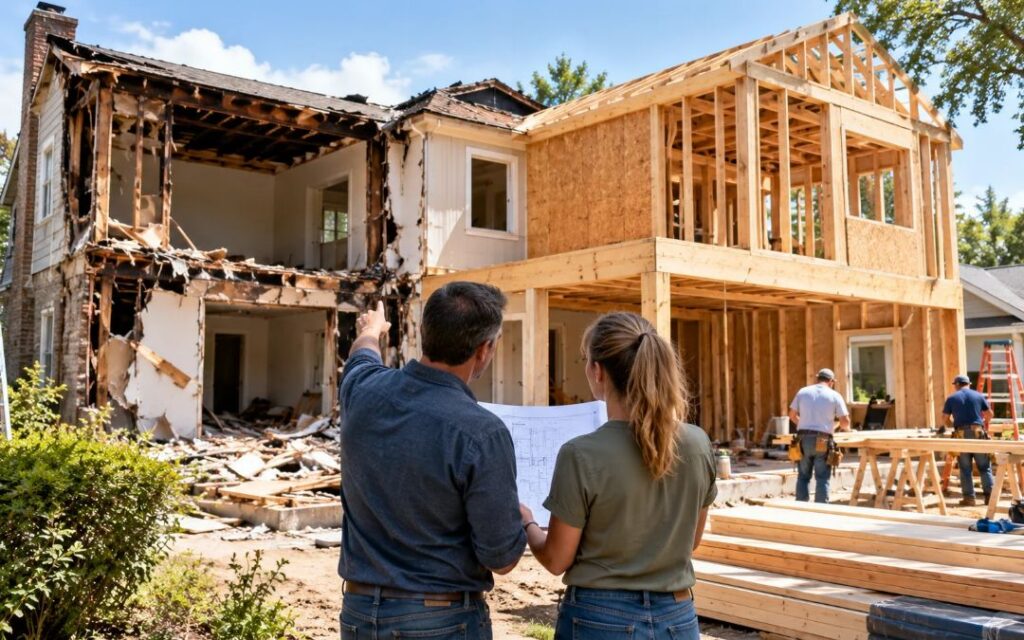
Living out of a suitcase gets old fast. Whether you’re staying with family, in a hotel, or in a rental across town, one question keeps coming up: when can we go home? If you’re asking how long does a home rebuild takes after a fire, flood, or storm, the honest answer is that it depends on the damage, the paperwork, and the team doing the work.
That doesn’t mean you’re stuck guessing. Once you understand how a rebuild unfolds, you can plan your life around it and spot the delays you can actually control. Below, we walk through each phase of the process, the factors that stretch timelines, and practical ways to keep your project moving in New Mexico and West Texas.
Quick answer: A home rebuild after major damage can take anywhere from a few weeks for limited repairs to several months for extensive structural work. Timing depends on the extent of damage, insurance approval, permits, material availability, and whether one company handles everything from cleanup to final walkthrough.
The Phases of a Home Rebuild
A rebuild isn’t one long project. It’s a series of stages, and each must finish before the next can start.
| Phase | What Happens | What Affects Timing |
| Emergency mitigation | Water extraction, board-up, tarping, drying | Size of the loss and moisture levels |
| Assessment and scope | Inspection, photos, detailed repair estimate | Hidden damage and project complexity |
| Insurance approval | Adjuster review and scope agreement | Carrier response time and documentation |
| Demolition | Removing damaged drywall, flooring, framing | Asbestos testing in older homes |
| Permits | Local building department approval | Workload at the permitting office |
| Reconstruction | Framing, electrical, plumbing, drywall, roofing | Material availability and inspections |
| Finishes and walkthrough | Paint, flooring, cabinets, final punch list | Custom selections and special orders |
Mitigation Comes First
Before rebuilding anything, the damage has to stop spreading. That means drying wet materials, removing soot, and securing the structure. Structural drying alone usually takes several days, and skipping it can trap moisture inside new walls. Professional water damage restoration or fire damage restoration sets the stage for everything after it.
Reconstruction Takes the Longest
Once demolition and permits are done, crews rebuild in a logical order: structure first, then systems like electrical and plumbing, then insulation, drywall, and finishes. Many of these steps require a city or county inspection before work can continue.
What Slows Down a Home Rebuild?
Some delays are unavoidable. Others come from decisions made early in the process. Common culprits include:
- Slow insurance approvals. Work often pauses until the carrier agrees on scope.
- Hidden damage. Rot, mold, or fire damage behind walls can expand the job once demolition begins.
- Asbestos in older homes. Materials in older properties may need testing and asbestos abatement before tear-out can continue safely.
- Permit backlogs. Building departments can get busy, especially after widespread storm damage.
- Material and special-order delays. Custom cabinets, specific tile, or certain windows may take extra time to arrive.
- Changing selections midstream. Switching finishes after ordering can reset part of the schedule.
- Multiple contractors. Handoffs between a cleanup company and a separate builder often add gaps.
How Can You Speed Up Your Home Rebuild?
You can’t control the weather or the permit office, but you can make choices that keep momentum on your side.
- Call for mitigation right away. Faster drying and cleanup means less damage to rebuild.
- Document everything. Photos, videos, and receipts help your claim move without back-and-forth.
- Stay responsive. Quick answers to your adjuster and contractor prevent idle days.
- Make finish selections early. Choosing flooring, paint, and fixtures upfront avoids later delays.
- Work with one team from start to finish. A single company handling mitigation and reconstruction removes handoff delays and keeps one point of contact.
Can You Live in Your Home During the Rebuild?
Sometimes. If damage is limited to one area and utilities are safe, some families stay while crews work in a sealed-off section. Major structural repairs, extensive smoke damage, or contamination usually mean you’ll need to move out temporarily.
Check your homeowners policy for additional living expenses coverage. Many policies help pay for temporary housing while your home is unlivable, though limits vary.
Get a Clear Answer on How Long Your Home Rebuild Will Take
Every property is different, so the most accurate answer to how long does a home rebuild takes comes from an on-site inspection and a detailed scope. The right team turns that scope into a realistic schedule and keeps you updated as each phase wraps up.
American Restoration handles the full journey under one roof, from emergency mitigation to repairs and rebuilds. As a licensed GB98 general contractor with IICRC-certified crews, we back our rebuild work with a 5-year warranty and provide the documentation insurance carriers expect. Homeowners near our Albuquerque office can call (505) 390-8728, and families in the El Paso area can reach us at (915) 265-5771. Ready to map out your path home? Schedule your free rebuild consultation today.
Frequently Asked Questions
What is the first step in rebuilding after major damage?
The first step is emergency mitigation, which stops further damage by drying, boarding up, or removing debris. Rebuilding on wet or contaminated materials creates bigger problems later.
Does insurance pay for a home rebuild?
Most homeowners policies cover rebuilding after covered events like fire or burst pipes, up to your policy limits. Flood damage typically requires separate flood insurance.
Do I need permits to rebuild after fire or water damage?
In most cases, yes. Structural, electrical, plumbing, and roofing work usually require permits and inspections from your local building department.
Can I choose my own contractor for a rebuild?
Yes. Homeowners generally can choose their restoration contractor, even if an insurance company recommends one.
Will my rebuilt home match the original?
Restoration aims to return your home to its pre-loss condition. Many homeowners also use a rebuild as a chance to upgrade finishes, though upgrades may add cost and time.