


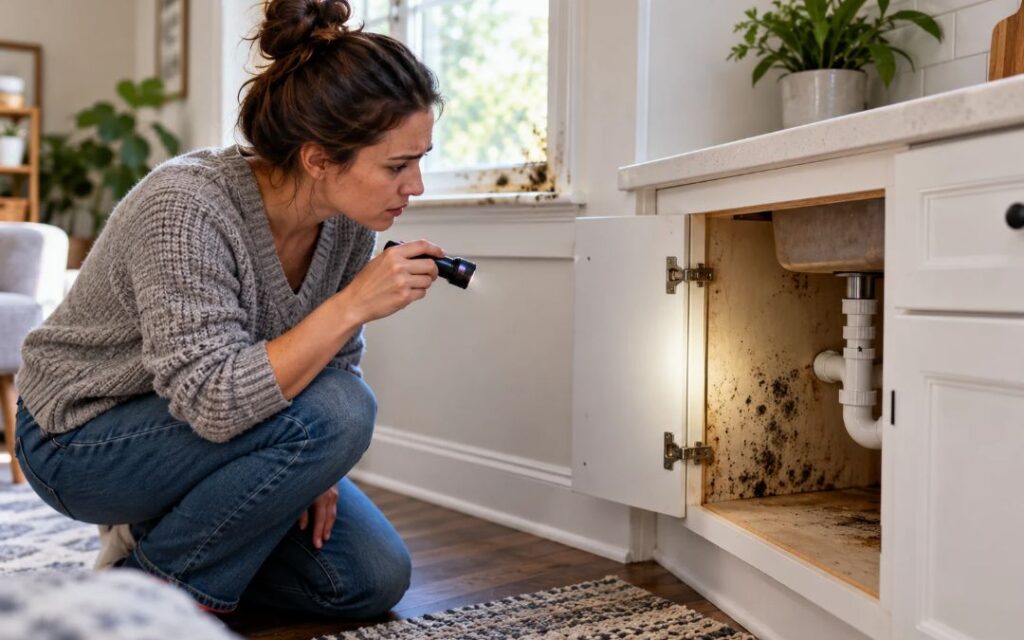
You can smell it, but you can’t find it. That faint, earthy odor drifts through a room, yet every surface looks spotless. If that sounds familiar, you’re not imagining things. Hidden mold in house spaces is incredibly common, and it tends to settle in the corners, cavities, and appliances most people never think to inspect.
You don’t need to tear your home apart to find it. It just takes knowing where moisture quietly builds up. This guide covers six overlooked spots, what to look for in each, and when a problem needs more than a DIY fix.
Quick answer: Hidden mold often grows behind and under refrigerators, inside front-load washers, in closets on exterior walls, along window tracks, in crawl spaces, and inside bathroom exhaust fans.
What Are the Signs of Hidden Mold?
Hidden mold usually announces itself indirectly:
- A musty smell that gets stronger in one area
- Allergy-like symptoms that ease when you leave the house
- Peeling paint, warping, or discoloration with no clear cause
- A history of leaks or water damage in that part of the home
1. Behind and Under the Refrigerator
Why mold hides here: Refrigerators collect condensation in a drip pan underneath, and many have ice-maker or water-dispenser lines running behind them. The motor’s warmth plus constant moisture creates a perfect growing spot.
How to check:
- Pull the fridge out and inspect the floor and wall behind it
- Look at the drip pan for slime, standing water, or dark buildup
- Check the ice maker supply line for drips at the connection
2. Inside Your Front-Load Washer
Why mold hides here: The rubber door gasket on a front-load washer traps moisture, lint, and detergent residue after every cycle, and closing the door right away seals in the dampness.
How to check:
- Peel back the gasket folds and look for black spots
- Sniff the drum and detergent drawer for a sour smell
- Wipe the gasket dry after laundry day and leave the door open
If clothes come out smelling musty, the washer itself is often the culprit.
3. Closets on Exterior Walls
Why mold hides here: Closets get little airflow, and the ones built against outside walls stay cooler than the rest of the house. On chilly New Mexico and West Texas nights, warm indoor air meets that cold wall and leaves condensation behind clothes and boxes.
How to check:
- Move stored items away from the back wall
- Look for spotting on walls, baseboards, and the closet floor
- Check leather shoes, bags, and stored fabrics for fuzzy growth
Leaving the door cracked and keeping a few inches between items and the wall helps air circulate.
4. Window Sills and Tracks
Why mold hides here: Windows are often the coldest surfaces in a room. Condensation forms on the glass, runs down into the tracks, and sits there with dust and debris that mold can feed on.
How to check:
- Slide windows open and inspect the bottom track
- Look for black or green specks around the frame and caulk
- Check whether weep holes are clogged and holding water
5. Crawl Spaces and Under-House Areas
Why mold hides here: Crawl spaces are dark, rarely visited, and close to the ground. Plumbing leaks, poor drainage after monsoon storms, or missing vapor barriers can keep the area damp for long stretches.
How to check:
- Look for standing water or damp soil
- Inspect wooden joists and subfloor for staining or fuzzy patches
- Notice whether musty air rises into rooms above
Since floors share air with the space below, crawl space mold can affect the whole house. Our article on signs of water damage in a basement covers related warning signs for below-grade areas.
6. Bathroom Exhaust Fans and Ceilings
Why mold hides here: Steam from showers rises straight to the ceiling. If the exhaust fan is weak, clogged, or vents into the attic instead of outside, moisture collects in the fan housing and on the drywall above the shower.
How to check:
- Remove the fan cover and look inside the housing
- Check the ceiling above the shower for small gray or black dots
- Hold a tissue to the fan to see if it actually pulls air
Should You Test for Hidden Mold?
Not always. The EPA notes that if you can see or smell mold, sampling usually isn’t necessary because you should remove it and fix the moisture first. Testing can help when you suspect mold but can’t locate it, or after remediation to confirm the cleanup worked.
The EPA also suggests that areas larger than about 10 square feet call for professional guidance. If you’re wondering what a professional job involves, our breakdown of the factors that influence mold removal cost explains what shapes the price.
Don’t Let Hidden Mold in House Spaces Spread
Hidden mold in house spaces rarely stays small. If you’ve checked these spots and the musty smell still lingers, or you found more than a small patch, it’s time to bring in an expert.
American Restoration’s IICRC-certified technicians locate concealed growth, contain the area, and handle complete mold removal and remediation for homes across New Mexico and West Texas. When a leak is feeding the problem, our water damage restoration team dries it out too. Call our Albuquerque mold specialists at (505) 390-8728, contact our El Paso crew at (915) 265-5771, or book a free in-home inspection and breathe easier knowing exactly what’s behind that smell.
Frequently Asked Questions
Can hidden mold make you sick?
Mold can trigger allergy symptoms, asthma flare-ups, and irritation of the eyes, nose, and throat in sensitive people. Anyone with ongoing symptoms should talk with a healthcare provider.
What does hidden mold smell like?
Hidden mold usually smells musty, earthy, or like damp cardboard. The odor often gets stronger in closed rooms or when the HVAC system turns on.
Can mold grow in a dry climate like New Mexico?
Yes. Dry outdoor air doesn’t stop indoor mold, because leaks, condensation, and poor ventilation create damp pockets inside the home.
How do professionals find hidden mold?
Professionals use moisture meters, thermal imaging cameras, and visual inspections to trace moisture behind walls, floors, and ceilings. Air or surface sampling may be added when the source isn’t obvious.
Can I remove hidden mold myself?
You can often clean small surface spots with proper protection. Mold inside walls, crawl spaces, or across larger areas is safer to leave to trained remediation crews.