


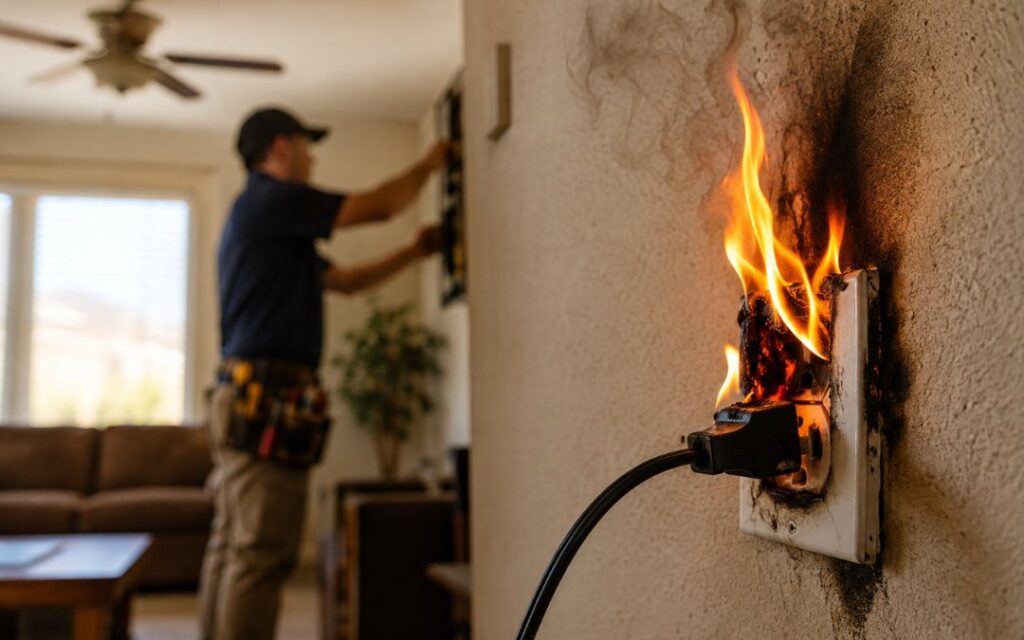
Electrical fires rarely begin with a dramatic spark. More often, the problem develops quietly. An outlet gets warm, a breaker trips repeatedly, a cord becomes damaged, or an older circuit is pushed beyond what it was designed to handle.
That is why understanding the causes of electrical fires matters. In New Mexico homes, aging electrical components, overloaded circuits, space heaters, appliances, and DIY repairs can create conditions where heat builds up, and materials ignite.
The warning signs often appear first. A burning smell, buzzing outlet, flickering light, warm receptacle, or repeated breaker trip should not be ignored.
Why Electrical Problems Turn Into Fires
Electricity normally moves through wiring without producing dangerous heat. Problems arise when connections loosen, wires become damaged, or circuits carry more electrical load than they can safely handle.
Understanding the causes of electrical fires starts with understanding how heat builds up. A loose connection inside an outlet, for example, can become hotter each time electricity passes through it. Over time, that heat can damage insulation and nearby materials.
Older homes may need closer attention because their electrical systems were designed around different household demands. DIY repairs can also create hidden problems when wiring or circuits are modified incorrectly.
Common Causes of Electrical Fires in Homes
The causes of electrical fires are often tied to small problems that develop gradually. A warm outlet, overloaded circuit, damaged cord, or aging wire may seem harmless at first. Over time, however, repeated heat and electrical stress can damage surrounding materials and create a fire risk.
1. Faulty or Aging Outlets
Outlets can become unsafe when internal connections loosen, contacts wear out, or components become damaged. Heat can build inside the electrical box without being immediately visible.
Watch for: Warm or discolored outlets, buzzing, crackling, loose plugs, or a burning smell.
2. Overloaded Circuits and Extension Cords
Modern homes often run multiple appliances and devices on the same circuits. Problems can develop when circuits are overloaded or extension cords and power strips become permanent wiring solutions.
Watch for: Frequent breaker trips, dimming lights, warm plugs, or cords that feel hot.
3. Old or Damaged Wiring
Wiring can deteriorate from age, physical damage, excessive heat, or previous electrical work. Damaged insulation can expose conductors or allow heat to build where it should not.
Watch for: Flickering lights, buzzing, burning odors, damaged insulation, or repeated breaker trips.
4. Space Heaters and Portable Appliances
Space heaters deserve extra attention because they generate substantial heat and are often used near furniture, bedding, curtains, and other combustible materials.
Watch for: Hot plugs, damaged cords, loose connections, or unusual operation. Plug heaters directly into wall outlets and keep combustible materials away.
5. Electrical Panel Problems
A breaker that keeps tripping is usually signaling an underlying electrical problem. Repeatedly resetting it without finding the cause can allow the problem to continue.
Watch for: Frequent trips, buzzing, burning odors, visible damage, or unusual heat around the panel.
Have a qualified electrician determine why the breaker is tripping rather than replacing or bypassing it yourself.
6. Improper DIY Electrical Work
Electrical modifications can become dangerous when wiring is connected incorrectly, circuits are overloaded, or components are installed without considering the existing system.
Watch for: Problems that began after remodeling, loose outlets, exposed wiring, unusual switch behavior, or unexplained breaker trips.
If electrical problems started after DIY work, have a qualified electrician inspect the installation before the issue becomes more serious.
Mistakes That Increase Electrical Fire Risk
Many causes of electrical fires begin with warning signs homeowners notice but choose to ignore. Small electrical problems rarely become safer with time.
- Ignoring warm outlets: Heat, discoloration, or a burning smell can signal a loose connection or wiring problem.
- Relying on extension cords: Using cords permanently may indicate that the home’s existing outlets or circuits cannot handle its electrical needs.
- Resetting breakers repeatedly: A breaker that keeps tripping is signaling a problem that needs to be investigated, not bypassed.
- Attempting DIY repairs: Incorrect electrical work can leave damaged connections or overloaded circuits hidden behind walls.
If you notice smoke, sparks, burning odors, or significant heat, move away from the hazard and contact the appropriate emergency or electrical professionals. Do not attempt to investigate live electrical components yourself.
When an Electrical Fire Has Already Happened
Understanding the causes of electrical fires can help you recognize risks earlier, but fires can still happen. When one occurs, the visible burn area may be only part of the damage.
Smoke and soot can spread through other rooms. Firefighting water can create additional damage, and electrical components may need professional evaluation before restoration begins.
American Restoration provides fire damage restoration, including smoke and soot cleanup, and can work with you through the insurance process.
If an electrical fire has affected your New Mexico home, contact American Restoration to assess the damage and determine the next steps.
FAQs
What are common warning signs of an electrical problem?
Warm or discolored outlets, flickering lights, buzzing, burning odors, sparks, and repeated breaker trips should be investigated.
Can an old electrical panel cause a fire?
Age alone does not mean a panel is unsafe. Its condition, compatibility, and any existing electrical faults should be evaluated by a qualified electrician.
Are space heaters an electrical fire risk?
They can be, particularly when damaged, improperly placed, or connected through extension cords or power strips. Follow the manufacturer’s instructions.
What should I do after an electrical fire?
Avoid damaged wiring and electrical equipment. Once the property is safe to enter, a restoration company can assess smoke, soot, water, and structural damage.