


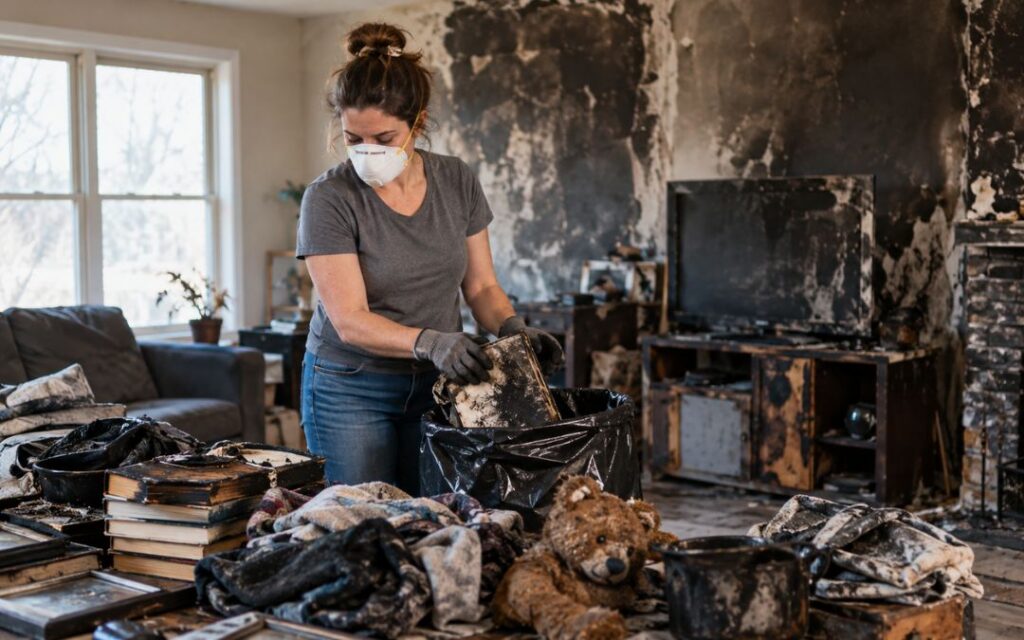
After a fire, the damage may extend far beyond what was burned by the flames. Smoke and soot can settle on belongings throughout the home, while heat and firefighting water can create additional problems. Some items may be too damaged or contaminated to use again, while others can still be cleaned and restored.
Knowing which items to throw away after fire damage can help you sort through your belongings without discarding things that may be salvageable.
What Items Should You Throw Away After Fire Damage?
Not every item exposed to a fire needs to go in the trash. The material, amount of damage, and type of exposure all matter. Items that are burned, heavily contaminated, or no longer safe to use are generally the ones that need to be discarded.
1. Food Exposed to Heat, Smoke, or Soot
Food can become unsafe after exposure to fire, smoke, soot, or excessive heat. This includes food stored in cabinets, refrigerators, and freezers if it was exposed to significant heat or smoke.
Even sealed packaging may not provide enough protection from fire-related contamination. When in doubt, it is safer to discard food rather than risk consuming something affected by the fire.
2. Medicines and Medical Supplies
Medications and medical supplies exposed to heat, smoke, soot, or contaminated water should generally be discarded. Heat can affect medications even when the containers look intact.
This also applies to items such as bandages, medical devices, and other supplies that may have been contaminated during the fire.
3. Cosmetics and Personal Care Products
Makeup, lotions, creams, toiletries, and similar products can absorb smoke and other contaminants. Heat can also affect their contents or packaging.
If these products were exposed to significant smoke, soot, or heat, replacing them is usually more practical than trying to clean them.
4. Melted or Heat-Damaged Plastics
Plastic containers, toys, utensils, and household items can melt, warp, or change shape when exposed to high temperatures. Heat can also affect materials that do not show obvious melting.
Heavily heat-damaged plastic items should not be treated as normal household goods simply because they still look usable.
5. Burned or Heavily Smoke-Damaged Clothing
Clothing that has been burned or severely damaged by heat cannot always be restored. Fabrics heavily coated with soot may also require professional evaluation before they can be used again.
Light smoke odor does not automatically mean clothing needs to be thrown away. Some garments can be professionally cleaned and deodorized.
6. Upholstered Furniture With Severe Smoke Damage
Sofas, mattresses, cushions, and other upholstered items can absorb smoke and soot deep into their materials. Severe exposure can make restoration difficult.
Furniture with limited smoke exposure may be salvageable, but heavily damaged or burned pieces may need to be discarded.
7. Heavily Damaged Paper and Books
Books, photographs, documents, and other paper materials can be difficult to restore after severe fire, smoke, soot, or water exposure. Burned or heavily damaged pages may not be recoverable.
Some documents and photographs with limited damage may still be candidates for specialized restoration, so avoid discarding everything automatically.
8. Items Contaminated by Firefighting Water
Firefighting efforts can introduce water, chemicals, and other contaminants into the home. Belongings exposed to contaminated water may not be safe or practical to keep.
The type of water and the material involved matter. Items that cannot be thoroughly cleaned or restored may need to be discarded.
What Can Be Saved After Fire Damage?
Not everything affected by a fire is beyond recovery. Hard, nonporous items may be easier to clean when they have limited smoke or soot exposure. Clothing, furniture, documents, and other belongings may also be salvageable depending on the extent of the damage.
Professional contents cleaning can help determine which items are worth restoring. This can prevent you from throwing away belongings that may still be recoverable.
What Should You Do With Fire-Damaged Belongings?
Sorting through belongings after a fire can be overwhelming. Start by separating items that are clearly burned or destroyed from those that may be salvageable.
Avoid using items that have been exposed to heavy smoke, soot, or heat until they have been properly evaluated. Take photos of damaged belongings for your insurance records, and keep potentially salvageable items in place when possible until they can be assessed.
FAQs About Items Damaged by Fire
What should I throw away after a house fire?
Food, medications, heavily burned materials, severely heat-damaged plastics, and items contaminated by unsafe water may need to be discarded. The type and extent of damage determine what can be safely restored.
Can you keep clothes after a fire?
Sometimes. Clothing with light smoke odor may be professionally cleaned, while burned or heavily contaminated garments may not be worth restoring.
Should I throw away food after a fire?
Food exposed to significant heat, smoke, soot, or contaminated water should generally be discarded. Sealed packaging does not always protect food from fire-related exposure.
Can smoke-damaged furniture be cleaned?
Some furniture can be professionally cleaned when the smoke damage is limited. Heavily burned or deeply contaminated upholstered furniture may not be practical to restore.
What should I do with items damaged by firefighting water?
Separate them from clearly destroyed belongings and avoid using them until they are evaluated. Items exposed to contaminated water may require specialized cleaning or may need to be discarded.
Conclusion
The items to throw away after fire damage are not always the ones that look the worst. Heat, smoke, soot, and contaminated water can affect belongings in different ways. Some items should be discarded, while others may be restored with the right cleaning process. Taking the time to assess your belongings can help you make better decisions during the cleanup.
Need Help With Fire Damage?
Dealing with fire-damaged belongings can be overwhelming. We can help assess your belongings, clean what can be restored, and help you determine what needs to be discarded. Contact us to discuss your next steps.