


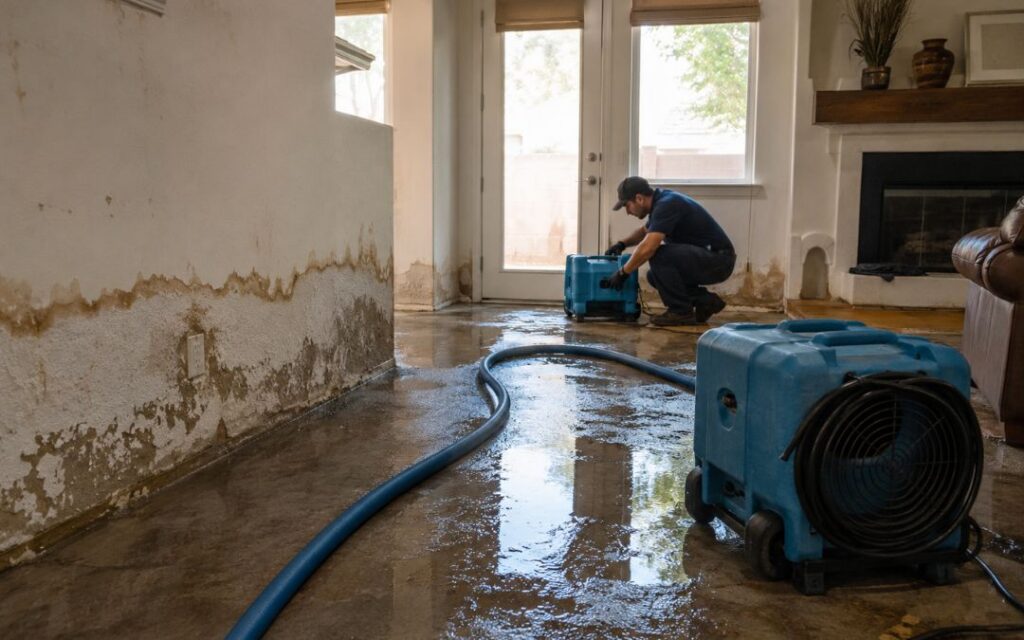
You may not realize how much water damage you have until someone looks beyond the wet floor.
A leaking dishwasher can leave water under the cabinets. A burst pipe can send moisture beneath flooring and into drywall. A roof leak may show up as a ceiling stain even though the water entered somewhere else.
That is why water damage restoration in New Mexico is not simply about removing the water you can see. The source, the amount of water, how long materials have been wet, and where the moisture traveled all affect what needs to happen next.
What to Do After Water Damage
Do not rush into cleanup before thinking about safety.
- Stop the water if it is safe. If a pipe or appliance is leaking and the shutoff is easy to reach, turn off the water. Do not enter an unsafe area to get to it.
- Stay away from electrical hazards. Never handle electrical equipment while standing in water. If outlets, wiring, appliances, or other electrical components may have been affected, stay out of the area and contact a qualified professional.
- Keep children and pets away. This is especially important after flooding or a sewage backup.
- Take photos and videos. Photograph damaged floors, walls, ceilings, cabinets, belongings, and the apparent source of the water.
- Move small valuables only if safe. Do not risk injury trying to save heavy items or enter an unsafe area.
- Call a restoration professional when the damage goes beyond a small spill. Water inside walls, flooring, ceilings, or insulation can require more than basic water damage cleanup.
Common Causes of Water Damage in New Mexico
Water damage can come from a plumbing failure, an appliance, the roof, or water entering the property from outside.
Common causes include:
- Burst or leaking pipes
- Washing machine and dishwasher leaks
- Water-heater failures
- Refrigerator and other appliance leaks
- Roof leaks
- Storm-related water intrusion
- Flooding
- Sewage backups
The source of the water matters. A broken supply pipe is different from sewage or floodwater, which may contain contaminants and require additional precautions.
For landlords and business owners, even a contained leak can create operational problems. A damaged rental unit, wet office, or closed-off section of a building may need attention before normal use can resume.
What Does Water Damage Restoration Involve?
The restoration process depends on the property and the type of water loss, but it usually includes several steps.
Inspection and moisture assessment help identify visible and concealed areas of moisture.
Water extraction removes standing water so the drying process can begin.
Drying and dehumidification reduce moisture in building materials and the surrounding air. The goal is to get affected areas properly dry, not simply make the surface feel dry.
Cleaning and sanitizing depend on the source of the water. Sewage and floodwater require different precautions from a clean plumbing leak.
Some materials may need to be removed if they cannot be safely cleaned or dried.
After mitigation, the property may need repairs and reconstruction, such as replacing drywall, repairing flooring, or rebuilding cabinets.
The distinction is simple:
Water mitigation controls the immediate damage. Reconstruction repairs the property afterward.
Keeping those phases separate helps prevent repairs from moving ahead before the underlying moisture problem has been addressed.
When Should You Call a Professional?
A small, clean spill that you can safely clean and completely dry may not require professional restoration.
Professional help is more appropriate when:
- Water has entered walls, ceilings, flooring, cabinets, or insulation.
- The source was sewage, floodwater, or another contaminated source.
- Electrical systems or equipment may have been exposed.
- Multiple rooms are affected.
- Materials have stayed wet for an extended period.
- You notice a musty odor or visible microbial growth.
- You are unsure whether the property is safe to enter.
When hidden moisture is possible, an assessment can tell you more than simply looking at the surface.
Does Insurance Cover Water Damage?
It can, but coverage depends on your policy and the cause of the loss.
A sudden burst pipe may be treated differently from long-term leakage or flooding. Your policy’s exclusions, limits, and other terms also affect coverage.
If you plan to file a claim, document the damage as early as possible. Keep photos and videos, note when you discovered the problem, save receipts for reasonable emergency expenses, and keep records of damaged belongings.
Contact your insurance company and follow its instructions.
A restoration company may provide photos, drying records, measurements, and a scope of work to help document the loss. However, the restoration company cannot guarantee what your insurer will cover.
Frequently Asked Questions
How quickly should water damage be addressed?
As soon as it is safe. Prompt water extraction and drying can reduce the time affected materials remain wet and may help limit additional damage.
Can I dry water damage myself?
For a small, clean spill, possibly. If water has entered walls or flooring, covers a large area, comes from sewage or flooding, or involves possible electrical hazards, professional help is safer.
How long does restoration take?
It depends on the extent of the damage. A small leak may need limited drying and repairs, while a larger loss may involve extraction, drying, cleaning, material removal, and reconstruction.
What should I do if water is near electrical outlets?
Do not touch outlets, appliances, cords, or other electrical equipment while standing in water. If the electrical system may have been affected, stay out of the area and have it evaluated by a qualified professional.
Does American Restoration help with insurance documentation?
American Restoration states that it provides documentation such as photographs, scope information, and drying records to help organize insurance claims. Your insurance company still determines coverage.
Get Help With Water Damage in New Mexico
If you are dealing with a burst pipe, appliance leak, roof leak, flood, or sewage backup, start with safety and get the damage assessed before assuming the visible water tells the whole story.
If you need water damage restoration in New Mexico, American Restoration provides 24/7 emergency response and free inspections in New Mexico and West Texas.
Contact us to discuss the damage and determine what needs to happen next.