


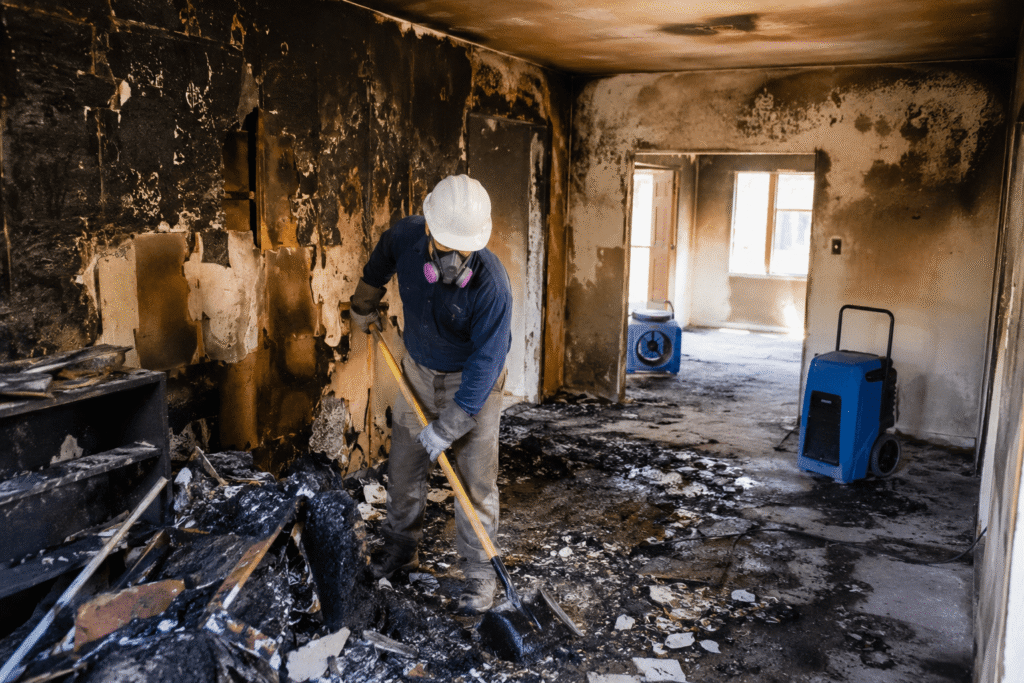
A fire can cause devastating damage to your home or business in a matter of minutes. Even after the flames are extinguished, smoke, soot, water from firefighting efforts, and structural damage can continue affecting your property.
For many property owners, the biggest question after a fire is, “What happens next?” Restoring a fire-damaged property involves more than removing burned materials. The fire damage restoration process includes assessing the damage, securing the property, removing debris, cleaning smoke and soot, addressing moisture issues, and completing necessary repairs.
Understanding each step can help you know what to expect during recovery and why professional restoration is often needed to safely return your property to its pre-fire condition.
From Fire Damage to Recovery: The Restoration Process
Many property owners are unsure about what happens after a fire. Understanding how fire damage restoration works can help you know what to expect during the recovery process.
Although every fire situation is different, professional restoration generally follows these important stages.
Emergency Inspection and Damage Assessment
The first step in any restoration project is a complete inspection of the property. Restoration technicians evaluate the severity of fire, smoke, and water damage before beginning cleanup.
During the assessment, professionals identify:
- Areas affected by flames
- Smoke and soot contamination
- Structural damage
- Water damage from firefighting
- Items that may be restored or require replacement
This evaluation enables the restoration team to develop a customized plan based on your property’s condition.
A quick response is important because smoke residue and moisture can continue causing damage even after the fire has been put out.
Securing the Property and Preventing Further Damage
Safety is the top priority after a fire. A damaged property may have unstable structures, broken windows, damaged doors, or unsafe areas to enter.
One of the most important fire restoration steps is securing the property before cleanup begins. Professionals may:
- Board up broken windows and doors
- Cover damaged openings
- Protect the property from weather exposure
- Restrict access to unsafe areas
- Prevent theft or vandalism
This step helps stabilize the property and creates a safer environment for restoration work.
Removing Fire-Damaged Materials and Debris
Once the property is secured, technicians begin removing non-restorable materials. This helps to flush out damaged areas and prepares the property for cleaning and repairs.
Professional restoration crews make careful decisions about what can be saved and what must be removed. It is not to replace unnecessarily but to restore effectively and to do so with as many of the belongings and materials in place as possible.”
Water Removal and Drying After Firefighting
Many people do not realize that water damage is often part of the recovery process after a fire. Firefighters use significant amounts of water to control flames, which can leave behind excess moisture.
If water damage is not handled quickly, it can lead to:
- Mold growth
- Structural deterioration
- Damaged flooring and walls
- Unpleasant odors
Restoration professionals use commercial-grade equipment to remove moisture and dry affected areas. This may include water extraction, air movers, and dehumidifiers to restore proper moisture levels.
Addressing water damage is an essential part of the overall fire damage restoration process.
Understanding the Smoke Damage Cleanup Process
Smoke damage can spread far beyond the area where the fire occurred. Even a small fire can leave behind smoke odors, soot stains, and residue throughout a property.
The smoke damage cleanup process focuses on removing harmful smoke particles and restoring affected surfaces.
During this stage, restoration professionals may:
- Clean soot from walls, ceilings, and surfaces
- Remove smoke odors
- Treat affected materials
- Clean furniture and personal belongings
- Restore items whenever possible
Soot contains acidic particles that can damage surfaces over time. Professional cleaning helps prevent permanent discoloration, corrosion, and additional deterioration.
Cleaning and Restoring Personal Belongings
A fire does not only damage the structure of a property; it can also affect personal belongings that hold financial or sentimental value.
Professional restoration companies evaluate items such as:
- Furniture
- Clothing
- Documents
- Electronics
- Household items
Many belongings can be restored through specialized cleaning and deodorization techniques. Restoration experts determine which items can be successfully recovered and provide appropriate treatment.
This step helps reduce unnecessary replacement costs and allows homeowners to keep valuable possessions whenever possible.
Repairs and Property Restoration
Once cleanup is complete, the final stage involves repairing and rebuilding damaged areas.
The amount of repair work depends on the severity of the fire. Some properties may only need minor repairs, while others may require extensive reconstruction.
Common restoration repairs include:
- Replacing damaged drywall
- Repairing flooring
- Painting walls and ceilings
- Restoring damaged rooms
- Rebuilding affected sections
The goal is to return your property to a safe, comfortable, and functional condition.
Why Professional Fire Restoration Services Are Important
Fire damage restoration requires specialized knowledge, equipment, and experience. Attempting to handle cleanup without professional help can expose you to safety risks and may cause damage to go unnoticed.
A professional fire restoration company can help by providing:
- Faster emergency response
- Proper smoke and soot removal
- Safe debris cleanup
- Advanced drying equipment
- Restoration expertise
- Complete repair solutions
Professionals understand that every fire situation is unique and create a restoration plan based on your specific needs.
How Long Does Fire Damage Restoration Take?
The timeline for restoration depends on several factors, including:
- The size of the affected area
- Severity of fire damage
- Amount of smoke and soot present
- Level of water damage
- Required repairs or reconstruction
Minor fire damage may be addressed within a few days, while larger restoration projects can take several weeks or longer.
A professional assessment can provide a more accurate timeline based on your property’s condition.
What Should You Do Immediately After Fire Damage?
After a fire, safety should always come first. Avoid entering the property until it has been inspected and declared safe. Here are some important steps to take:
- Contact your insurance provider
- Avoid touching soot-covered surfaces
- Do not attempt major cleanup yourself
- Keep children and pets away from damaged areas
- Contact a professional restoration company
Starting the restoration process quickly can help minimize further damage and improve the chances of successfully restoring your property.
Restore Your Property With American Restoration
Recovering after a fire can feel overwhelming, but professional help can make the process easier. From emergency assessment and smoke cleanup to repairs and rebuilding, experienced restoration technicians provide the support needed during every stage of recovery.
At American Restoration, we are committed to helping homeowners and businesses restore their properties after fire emergencies. Our trained technicians use industry-approved methods to address fire, smoke, and water damage while helping you return to normal as quickly as possible.
If your property has experienced fire damage, contact American Restoration for professional restoration assistance.
Frequently Asked Questions
What are the main steps involved in fire damage restoration?
The main fire restoration steps include property inspection, securing the structure, removing damaged materials, smoke and soot cleanup, drying water-damaged areas, restoring belongings, and completing repairs.
How does fire damage restoration work after a house fire?
How fire damage restoration works depends on the extent of the damage. Professionals first assess the property, remove hazards, clean smoke and soot, address moisture issues, and restore damaged areas.
Why is the smoke damage cleanup process important?
The smoke damage cleanup process removes soot, odors, and harmful residue left behind after a fire. Professional cleaning helps prevent long-term damage to surfaces and belongings.
Can items damaged by fire and smoke be restored?
Yes. Many items can be restored depending on their condition. Restoration professionals use specialized cleaning methods to recover furniture, clothing, documents, and other belongings whenever possible.
How soon should fire damage restoration begin?
Fire restoration should begin as soon as the property is safe to enter. Quick action helps reduce smoke damage, prevent moisture-related issues, and improve restoration results.