


Black Mold vs. Asbestos: How to Identify & Remove
Published
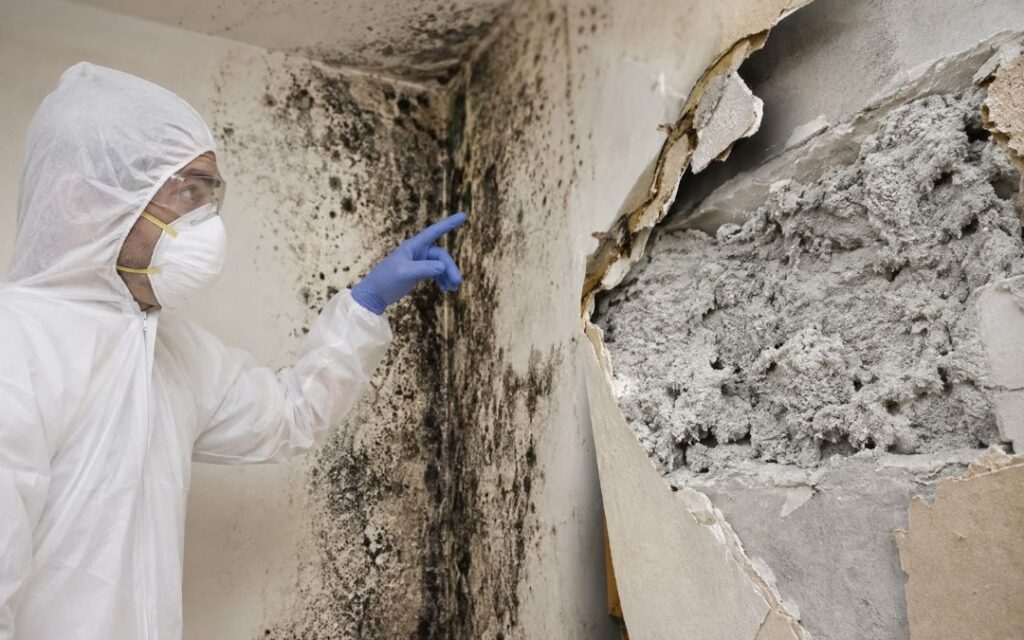
Finding a dark patch on a wall or an old material that looks unusual can lead to the same question: What am I looking at, and is it dangerous? Black mold and asbestos are very different hazards, and you cannot reliably identify either one simply by appearance.
If you are comparing black mold vs asbestos, the most useful place to start is understanding where each comes from, what signs can raise suspicion, and when you should stop investigating yourself and bring in a professional.
Black Mold and Asbestos Are Not the Same Thing
Mold is a biological growth that typically develops in areas with moisture. Asbestos is a naturally occurring mineral that was used in many older building products.
Mold may appear after leaks, flooding, condensation, or prolonged dampness. Asbestos may already be present in older flooring, insulation, ceilings, roofing, siding, and other materials. One develops under the right conditions, while the other may have been part of the building for decades.
What Does Black Mold Look Like?
People often use “black mold” to describe dark-colored mold growth, but color alone does not tell you what type of mold you are seeing.
Mold can appear in different colors and textures. It may look spotted, fuzzy, slimy, or powdery depending on the surface and conditions.
More useful clues are the circumstances around it:
- A recent or ongoing water leak
- Damp drywall or flooring
- Condensation
- A musty odor
- Visible growth around moisture-damaged areas
- Previous flooding or water intrusion
You should not rely on appearance alone to identify a specific type of mold.
What Does Asbestos Look Like?
This is where things get tricky. There is no reliable visual test for asbestos.
Asbestos was incorporated into many different products, so suspected asbestos-containing material can look very different depending on what it was used for. It may be found in older floor tiles and adhesives, pipe insulation, ceiling materials, insulation, roofing products, siding, and textured coatings.
If you suspect an older material contains asbestos, do not scrape, cut, break, or otherwise disturb it just to get a closer look.
Professional evaluation and appropriate testing may be needed to confirm its presence.
Black Mold vs Asbestos: Which Is More Dangerous?
That is not really a useful way to compare them.
The risks are different, and the circumstances matter. Mold growth indicates a moisture problem that needs to be addressed, while disturbing asbestos-containing material can release fibers that may become airborne.
The condition of the material, how it is disturbed, how extensive the problem is, and whether people are exposed all affect the situation.
Rather than trying to decide which one is “worse,” focus on identifying what you actually have and keeping the affected area from being unnecessarily disturbed.
How Is Black Mold Removed?
Mold removal starts with finding the moisture problem. Professional remediation may include:
- Identifying and addressing the water source
- Assessing affected areas
- Removing materials that cannot be restored
- Cleaning affected surfaces
- Drying the property
Cleaning visible mold alone may not solve the problem if moisture remains hidden behind walls or beneath flooring.
How Is Asbestos Removed?
Asbestos requires specialized handling because disturbing asbestos-containing materials can release fibers.
The process may include:
- Assessing and testing the material
- Controlling the work area
- Removing or otherwise managing the material
- Properly handling and disposing of waste
- Cleaning and completing required verification
If you suspect asbestos, do not cut, scrape, break, or remove the material yourself.
What If You Are Not Sure Which One You Have?
This is where guessing can create unnecessary problems.
A dark patch on drywall is not enough to confirm mold, and an old piece of insulation is not enough to confirm asbestos. The age and location of the material may provide useful context, but neither should be treated as proof.
If you are dealing with visible growth, start by considering whether there is a moisture problem. If you are concerned about an older building material, avoid disturbing it and have it evaluated appropriately.
When Should You Call a Professional?
Professional help makes sense when the situation goes beyond something you can safely identify and address yourself.
Consider getting an assessment if:
- Water damage has affected drywall, flooring, insulation, or other building materials.
- You see extensive or recurring mold growth.
- There is a persistent musty odor after water damage.
- You suspect an older building material contains asbestos.
- Renovation or demolition will disturb suspected asbestos-containing materials.
- You are unsure whether the property is safe to enter or use.
The right professional also depends on the problem. Mold remediation and asbestos abatement are different types of work, so make sure the company you contact handles the specific issue you are facing.
Frequently Asked Questions
Can you tell black mold and asbestos apart by looking at them?
Not reliably. Mold can be visible, but its appearance does not confirm the type. Asbestos also cannot be confirmed simply by looking at an older building material.
Can black mold grow on asbestos?
Yes, mold can grow on or around building materials when moisture is present. If the material may contain asbestos, avoid disturbing it while the situation is evaluated.
Should I test for mold or asbestos?
It depends on what you have found. Suspected asbestos-containing materials may require professional evaluation and testing, while mold concerns are often assessed based on visible growth, moisture, and the condition of the property.
Is mold removal the same as asbestos removal?
No. Mold remediation focuses on addressing moisture and removing or cleaning affected materials. Asbestos abatement involves specialized procedures for controlling or removing asbestos-containing materials.
What should I do if I am unsure what I found?
Do not scrape, cut, or remove the material just to identify it. Keep the area undisturbed and have the material or damage evaluated by an appropriate professional.
Not Sure What You Are Dealing With?
You do not have to figure out whether you are dealing with mold or asbestos by looking at it yourself. The right next step depends on the material, its condition, and what caused the problem.
At American Restoration, we can help assess the situation and explain what needs to happen next. Contact us to discuss your property and arrange an evaluation.