


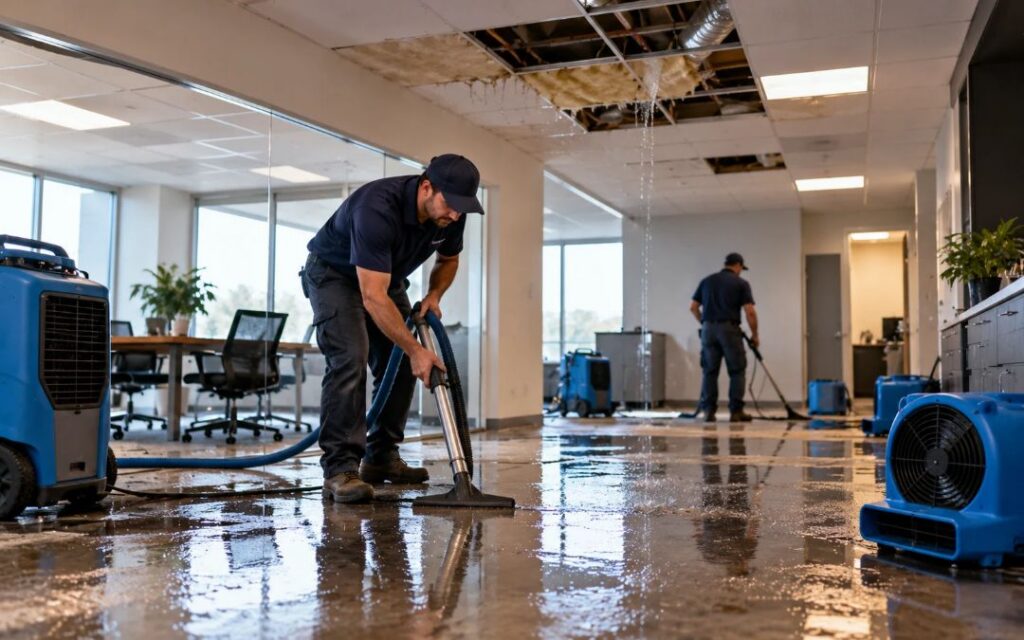
Running a business means juggling a hundred priorities, and the plumbing above your ceiling probably isn’t near the top of that list. That makes sense. Until the day it is. A burst sprinkler line, a backed-up restroom, or a monsoon storm pouring through a flat roof can turn an ordinary Tuesday into a closed-for-the-day sign. Commercial water damage rarely stays a simple cleanup job for long.
The upside is that most fallout is preventable if you know what’s at stake and act fast. In this guide, you’ll find the five biggest risks water creates for offices, retail stores, restaurants, warehouses, and other commercial properties in New Mexico and West Texas, plus a simple plan for the first few hours after a leak.
At a glance: The main risks of commercial water damage are lost revenue from downtime, hidden structural damage and mold, safety and liability hazards, contaminated water, and insurance claim problems caused by slow response or poor documentation.
Risk 1: Downtime That Drains Revenue
For a homeowner, water damage is a mess. For a business, it’s a mess with a running meter. Every hour your doors stay closed means lost sales, idle staff, missed appointments, and customers who may try a competitor and never come back.
The damage spreads beyond the wet area, too. A soaked server room, flooded stockroom, or unusable dining area can shut down an entire operation.
Protect your business:
- Know where your main water shutoff is and make sure managers do too
- Keep critical equipment and inventory off the floor where possible
- Choose a restoration partner that can work in phases so unaffected areas stay open
Risk 2: Hidden Damage Inside the Building
Commercial buildings hide a lot behind drop ceilings, raised floors, and long runs of drywall. Water travels along beams, pipes, and insulation, so the stain you see in the lobby may have started two rooms away.
What stays wet keeps causing harm. Drywall weakens, flooring adhesives fail, and mold can take hold. The EPA advises drying wet materials within 24 to 48 hours to help prevent mold growth, a window that is easy to miss when nobody can see the moisture.
Warning signs to watch:
- Sagging or stained ceiling tiles
- Musty odors in back rooms or HVAC returns
- Warped baseboards or lifting flooring
If water has already caused growth, professional mold remediation can keep it from spreading through shared air systems.
Risk 3: Safety Hazards and Liability
Wet floors cause slips. Water near outlets and panels increases the risk of electric shock. Saturated ceilings can collapse without warning.
OSHA’s walking-working surfaces standard requires employers to keep floors clean and, as far as possible, dry. Beyond that obligation, an injury on your property can lead to claims that cost far more than the cleanup.
Protect your people:
- Rope off wet areas and post clear warning signs right away
- Keep staff away from standing water near electrical equipment
- Don’t stand under bowed or dripping ceilings
Risk 4: Contaminated Water
Not all water is equal. The restoration industry’s IICRC standard sorts water damage into three categories: clean water from a supply line, gray water with some contamination, and black water, which includes sewage and floodwater.
Sewage backups in restaurants, hotels, schools, and multi-tenant buildings fall into that last group. Black water can carry bacteria and other pathogens, so it requires protective equipment, safe disposal, and proper sanitizing, not a mop and a fan. Porous materials it touches often have to be removed.
For sewage and other unsanitary spills, American Restoration provides biohazard cleanup with full PPE and documented sanitization.
Risk 5: Insurance Claim Headaches
Commercial policies often cover property damage and, in many cases, business interruption. Getting paid is another matter. Adjusters want to know what happened, when it started, and what you did to limit the damage.
Delays and thin records can shrink a claim fast. Many policies also expect owners to take reasonable steps to prevent further loss, so waiting days to call for help can work against you.
Protect your claim:
- Photograph and video everything before anything is moved
- Write down when the leak was discovered and who responded
- Keep receipts for emergency repairs and supplies
- Work with a restoration company that provides moisture readings, drying logs, and itemized scopes
What Should You Do in the First Few Hours?
Speed shapes the outcome more than almost anything else. Here is a quick action plan:
- Shut off the water source or main valve if it’s safe to do so.
- Cut power to affected areas if water is near electrical systems.
- Move people out of hazardous zones and block off wet floors.
- Document the damage with photos and notes.
- Call your insurance carrier and a professional restoration team.
Get Ahead of Commercial Water Damage
Commercial water damage costs more the longer it sits, through lost business, repair costs, and increased risk. A fast, organized response protects your property, your people, and your bottom line.
American Restoration handles all kinds of commercial properties, from offices and retail stores to hotels, schools, and warehouses. Our IICRC-certified crews answer 24/7 for emergency commercial water damage restoration, then manage repairs and rebuilds under one roof so you don’t have to coordinate multiple contractors. Business owners in Albuquerque can call (505) 390-8728, and those in El Paso can reach our team at (915) 265-5771. Need a walkthrough before trouble strikes? Book a free commercial property inspection today.
Frequently Asked Questions
Does commercial insurance cover water damage?
Many commercial policies cover sudden, accidental water damage, but coverage varies by policy. Flood damage and long-term leaks are often excluded, so review your policy with your agent.
Can my business stay open during water damage restoration?
Often, yes. Restoration crews can contain affected areas and work in phases so unaffected parts of the building keep operating.
How long does commercial water damage restoration take?
Drying alone often takes several days, depending on the space size and materials involved. Repairs and rebuilding can take longer.
Who is responsible for water damage in a leased commercial space?
It depends on your lease. Many leases split responsibility between the landlord and tenant based on the cause and the affected area, so review the terms and notify your landlord right away.
What causes most commercial water damage?
Common causes include burst pipes, roof leaks, sprinkler system failures, HVAC condensation, and sewage backups. Regular inspections of these systems help catch problems early.