


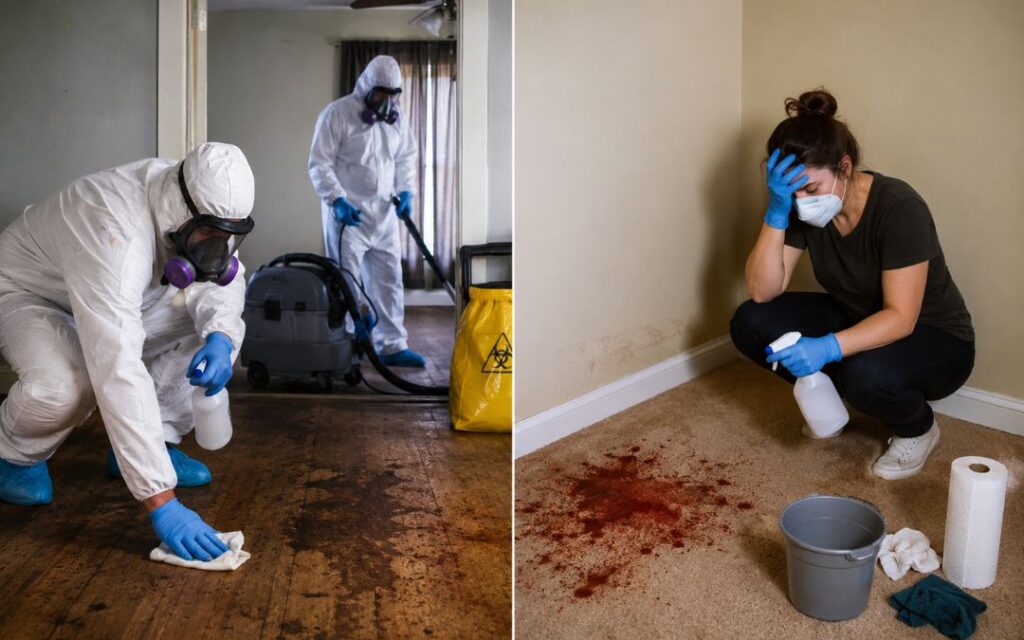
You may be able to clean an ordinary household mess yourself, but biohazard cleanup is different. Finding blood after an accident, dealing with sewage, or discovering contamination after an unattended death can leave you wondering what you can safely handle on your own.
The answer depends less on how unpleasant the mess looks and more on what caused it, what materials were affected, and whether there is a risk of exposure.
That is where the difference between biohazard cleanup professional vs DIY becomes important.
Can You Handle Biohazard Cleanup Yourself?
Not every cleanup requires a professional crew. A minor, clearly understood household mess may be manageable, but the situation changes when biological contamination is involved or the extent of the contamination is unclear.
The difficulty is knowing where that line falls. What looks like a small cleanup on the surface may have reached materials underneath or nearby.
For example, a small surface spill is different from blood that has soaked into carpet, upholstery, drywall, or other porous materials. Sewage, decomposition, and unknown biological contamination also require more caution than ordinary cleaning.
If you cannot confidently determine what the substance is, how far it has traveled, or whether the affected area can be safely cleaned, it is reasonable to bring in a professional.
When Professional Biohazard Cleanup Is the Safer Choice
Some situations are simply harder to evaluate from the outside. The source of the contamination, the materials involved, and what happened before you arrived can all affect what cleanup requires.
Blood and Bodily Fluid Contamination
Blood and bodily fluids can create a more complicated cleanup when they reach porous materials. Carpet, mattresses, upholstery, unfinished wood, drywall, and similar materials may absorb contamination rather than simply have it sitting on the surface.
A professional assessment can help determine what can be cleaned and what may need to be removed.
Unattended Deaths and Trauma Scenes
An unattended death or traumatic event can involve more than what is immediately visible. Biological contamination, odors, and affected materials may extend beyond the obvious area.
There is also a practical consideration. Families and property owners dealing with these situations may already have enough to manage without taking on the cleanup themselves.
Sewage and Unknown Contamination
Sewage should not be treated like an ordinary water leak. It can contain microorganisms and contaminants that make cleanup more complicated.
The same caution applies when you discover an unknown substance or contamination that has already spread through a property. If you do not know what you are dealing with, professional assessment is the safer starting point.
What Does Professional Biohazard Cleanup Involve?
Professional biohazard remediation is more than wiping down visible surfaces. The work is intended to address contamination, affected materials, and the waste created during cleanup.
The process typically begins with an assessment of what happened and which areas and materials may be affected. Depending on the situation, the work may then involve containment, removal of materials that cannot be adequately restored, cleaning and disinfection, odor treatment, and appropriate handling of contaminated waste.
The exact process depends on the type and extent of contamination.
That distinction matters because regular cleaning focuses on visible dirt or residue, while biohazard remediation addresses the contamination and affected materials as a whole.
What Can Affect the Cost of Biohazard Cleanup?
There is no single price for biohazard cleanup. A job involving a small, contained area can be very different from one where contamination has reached multiple rooms or absorbed into building materials.
Factors may include:
- Size of the affected area
- Type of biological contamination
- Amount of affected material
- Porous surfaces that may require removal
- Accessibility of the area
- Waste handling and disposal requirements
- Odor treatment
- Repairs or reconstruction afterward
A cleanup that looks small at first can involve more work if contamination has reached materials that cannot simply be wiped clean.
Biohazard Cleanup Professional vs DIY: Questions to Ask
If you are trying to decide what to do next, you do not need to know every technical detail. A few practical questions can help you understand whether this is ordinary cleaning or something that needs professional remediation.
Ask yourself:
- What exactly caused the contamination?
- Has it reached porous materials?
- Is the substance known or unknown?
- Does anything need to be removed?
- How will contaminated materials be handled and disposed of?
- Does the cleanup include odor treatment or repairs if needed?
You do not need to know all the answers yourself. In fact, uncertainty is often a good reason to ask a professional for an assessment before disturbing the area.
Frequently Asked Questions
These questions come up often when property owners are deciding whether professional biohazard cleanup is necessary.
Can I clean up a small amount of blood myself?
It depends on the circumstances, the amount involved, and the surface affected. If contamination is extensive, has entered porous materials, or you are unsure about the risks, professional cleanup is a safer option.
When should I call a biohazard cleanup company?
Consider professional help when you are dealing with significant blood or bodily-fluid contamination, an unattended death, sewage, unknown biological material, or affected materials that cannot be safely addressed through ordinary cleaning.
Is sewage considered a biohazard?
Sewage can contain harmful microorganisms and should be treated as contaminated material. If sewage has entered your property, professional cleanup may be appropriate, particularly when the affected area is extensive or materials have absorbed the contamination.
Does biohazard cleanup include repairs?
Not always. Cleanup and remediation address the contamination, while reconstruction restores damaged parts of the property. Ask what is included before work begins.
How long does biohazard cleanup take?
It depends on the type and extent of contamination. A small, contained area may require less work, while situations involving porous materials, multiple rooms, sewage, or an unattended death can take longer. A professional assessment can give you a clearer idea of the expected scope.
Get Help With Biohazard Cleanup
If you are dealing with blood, bodily fluids, sewage contamination, an unattended death, or another situation that goes beyond ordinary cleaning, American Restoration can help you determine what needs to happen next.
Contact American Restoration to discuss the situation and arrange professional biohazard cleanup when needed.