


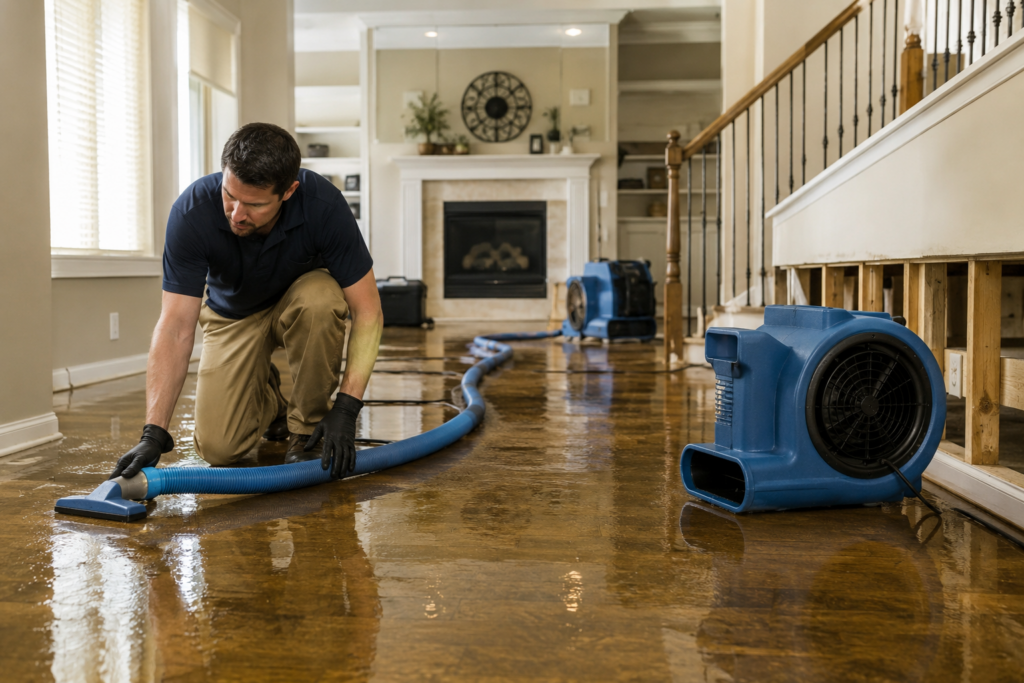
Discovering water where it doesn’t belong can be stressful. Whether it’s caused by a burst pipe, an overflowing appliance, a leaking roof, or storm-related flooding, every minute counts once water enters your home or business.
The steps you take immediately can help reduce further damage and make the restoration process smoother.
Knowing what to do after water damage isn’t just about cleaning up visible water. Moisture can quickly spread into drywall, flooring, insulation, and other building materials, leading to structural damage and mold growth if left untreated.
At American Restoration Water and Fire, we’ve helped property owners throughout New Mexico communities respond to water damage emergencies.
Here’s what you should know about protecting your property during the water damage first 24 hours.
Why the First 24 Hours Are So Important
Water begins affecting your property almost immediately. As it spreads, it can soak into porous materials and reach areas that aren’t easily visible.
During the first 24 hours, water may:
- Damage drywall and insulation
- Warp hardwood or laminate flooring
- Affect baseboards and cabinets
- Create conditions for mold growth
- Weaken certain building material
A fast, immediate water damage response can help limit the extent of the damage and reduce the amount of restoration work needed later.
What to Do Immediately After Water Damage
Before beginning any cleanup, take a moment to assess the situation. Protecting yourself and others should always be the first priority after water damage.
Put Safety First
Your safety should always come before cleanup.
If water has reached electrical outlets, appliances, or wiring, avoid entering the affected area until it is safe to do so. If you suspect structural damage or contaminated water, wait for trained professionals before re-entering the property.
Taking a few moments to assess the situation can help prevent injuries during an already stressful event.
Stop the Source of the Water
If it is safe, stop the water from entering the property. Depending on the cause, this may include:
- Turning off the main water supply
- Shutting off a leaking appliance
- Closing a damaged water valve
- Temporarily limiting water intrusion until permanent repairs can be made
Stopping the source is one of the most important emergency water damage steps, as it helps prevent additional damage while restoration begins.
Document the Damage
Before moving furniture or removing damaged materials, take clear photographs and videos of the affected areas. Try to document:
- Wet flooring
- Water-damaged walls and ceilings
- Furniture
- Appliances
- Personal belongings
- Areas where water entered the property
Having detailed records can be useful when reporting the incident to your insurance provider.
Contact Your Insurance Provider
If your homeowner’s or commercial insurance policy may cover the damage, contact your insurance company as soon as possible.
Be prepared to explain:
- When the damage occurred
- What caused the water intrusion
- Which areas have been affected
Keeping photos and written records may help support your claim throughout the restoration process.
Remove Standing Water in House as Soon as Possible
One of the biggest priorities during the water damage first 24 hours is removing standing water in house areas before it continues soaking into building materials.
Small amounts of water may be removed using mops, towels, or wet/dry vacuums if it is safe to do so. However, larger volumes of water often require professional extraction equipment to remove it efficiently and reduce the moisture left behind.
The sooner standing water is removed, the lower the risk of additional damage to floors, walls, and belongings.
Begin Drying the Affected Areas
Even after visible water has been removed, moisture often remains inside walls, flooring, and other materials. If conditions are safe, you can begin drying the affected areas by:
- Opening windows when the weather permits
- Running fans to improve airflow
- Using dehumidifiers
- Removing wet rugs or small items from affected rooms
This helps the property to dry out as quickly as possible and minimizes any remaining moisture which could cause further damage.
Protect Furniture and Personal Belongings
Water can continue damaging furniture and personal belongings long after the initial incident.
If possible:
- Move furniture to dry areas.
- Remove electronics from affected rooms.
- Pick up rugs and other removable flooring.
- Relocate important documents and valuables.
If large furniture cannot be moved, placing protective material beneath the legs may help reduce additional moisture exposure.
Avoid Common Mistakes During the First 24 Hours
When dealing with water damage, it’s easy to make decisions that may create larger problems later.
Avoid these common mistakes:
- Waiting too long before starting the cleanup
- Ignored damp walls or flooring
- Assuming surfaces are dry because they no longer feel wet.
- Leaving wet carpets in place for extended periods
- Waiting for professional restoration when there is a lot of water damage
Acting quickly helps reduce the likelihood of more extensive repairs.
Why Quick Action Matters
Water is not always seen. Moisture can migrate behind drywall, under flooring and into structural materials.
Without a prompt, immediate water damage response, hidden moisture may continue affecting your property even after visible water has disappeared.
Responding quickly can help:
- Limit additional property damage
- Reduce moisture inside building materials
- Lower the risk of mold growth
- Make the restoration process more efficient
What to Do After the First 24 Hours
Once the immediate emergency has been addressed, continue monitoring your property as restoration work progresses.
Watch for Signs of Moisture
Continue checking affected areas for:
- Damp walls
- Water stains
- Soft flooring
- Musty odors
These may indicate that moisture is still present.
Don’t Rush Repairs
Avoid replacing drywall, flooring, or other building materials until affected areas have been properly dried. Making repairs too soon may trap moisture inside the structure and lead to additional problems later.
Monitor for Mold Growth
Water damage can leave residual moisture that creates an environment conducive to mold growth. Watch out for:
- Musty odor
- Dark spots on walls or ceilings
- Paint removal
- More humidity in the house
If mold develops, professional mold remediation may be needed to address the issue safely.
Continue Following Your Insurance Claim
Keep copies of:
- Photos
- Restoration invoices
- Repair estimates
- Communication with your insurance provider
Organized records can help throughout the claims process.
How American Restoration Water & Fire Can Help
Water damage often affects more than what is visible on the surface. Moisture can remain inside walls, flooring, and other building materials even after standing water has been removed.
American Restoration Water & Fire provides 24/7 water damage restoration services for residential and commercial properties throughout New Mexico communities. Our team responds quickly to assess the damage, remove excess water, dry affected areas, and restore your property.
Whether the damage is caused by a burst pipe, appliance leak, roof leak, or storm, we’re here to help you begin the restoration process as quickly as possible.
Protect Your Property by Acting Quickly
Knowing what to do after water damage can make a significant difference in protecting your home or business. Acting during the water damage first 24 hours helps reduce additional damage, supports the restoration process, and may lower the risk of long-term issues such as mold growth.
If your property has experienced water damage, American Restoration Water & Fire provides 24/7 emergency restoration services throughout Albuquerque and surrounding New Mexico communities. Our experienced team is ready to respond, assess the damage, and help restore your property.
Frequently Asked Questions
1. What should I do immediately after discovering water damage?
The first steps in emergency water damage response include ensuring the area is safe, stopping the water source if possible, documenting the damage, and contacting a professional water damage restoration company.
2. Why are the first 24 hours after water damage so important?
The first 24 hours after water damage are critical because moisture can quickly spread into walls, flooring, and other building materials, increasing the risk of structural damage and mold growth.
3. Should I remove standing water myself?
Small amounts of standing water in house areas may be removed safely if conditions allow. Larger amounts of water should be handled by restoration professionals using specialized extraction equipment.
4. What should I do after the first 24 hours?
Continue to monitor affected areas for residual moisture and do not make repairs until the materials are completely dry. Watch for mold growth as restoration work continues.
5. When should I call a water damage restoration company?
It’s best to contact a restoration company as soon as possible. A fast, immediate water damage response can help reduce additional property damage and begin the drying and restoration process promptly.